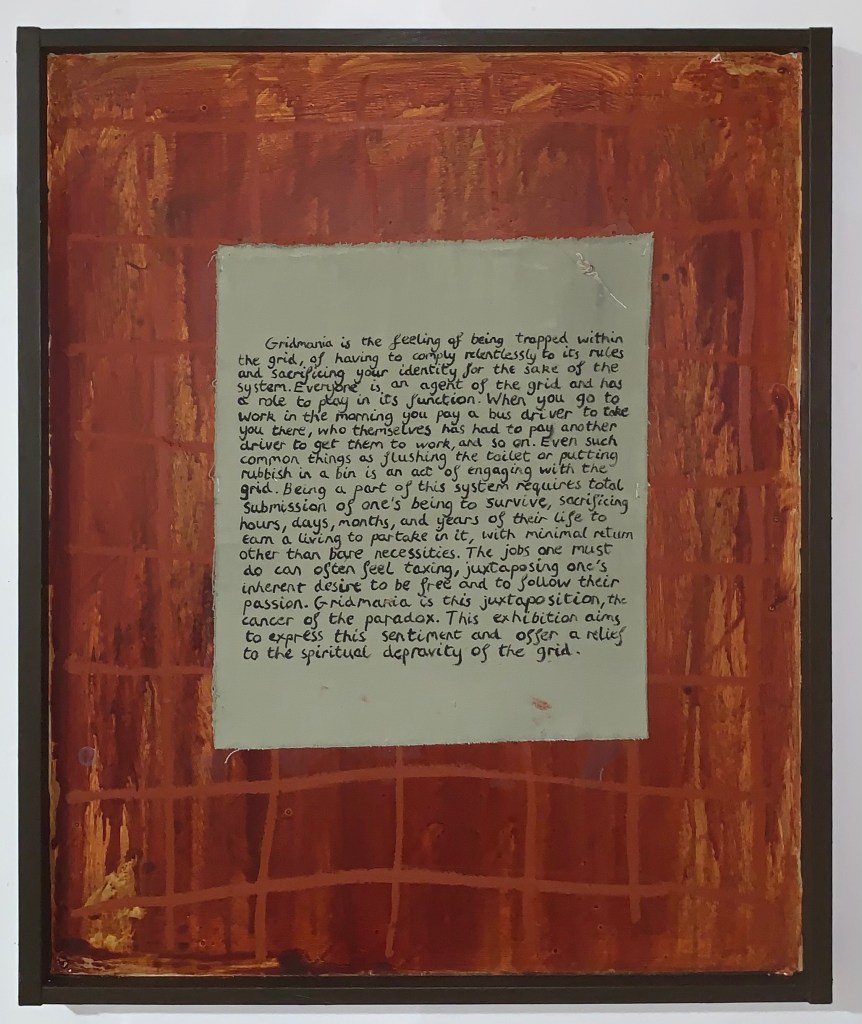
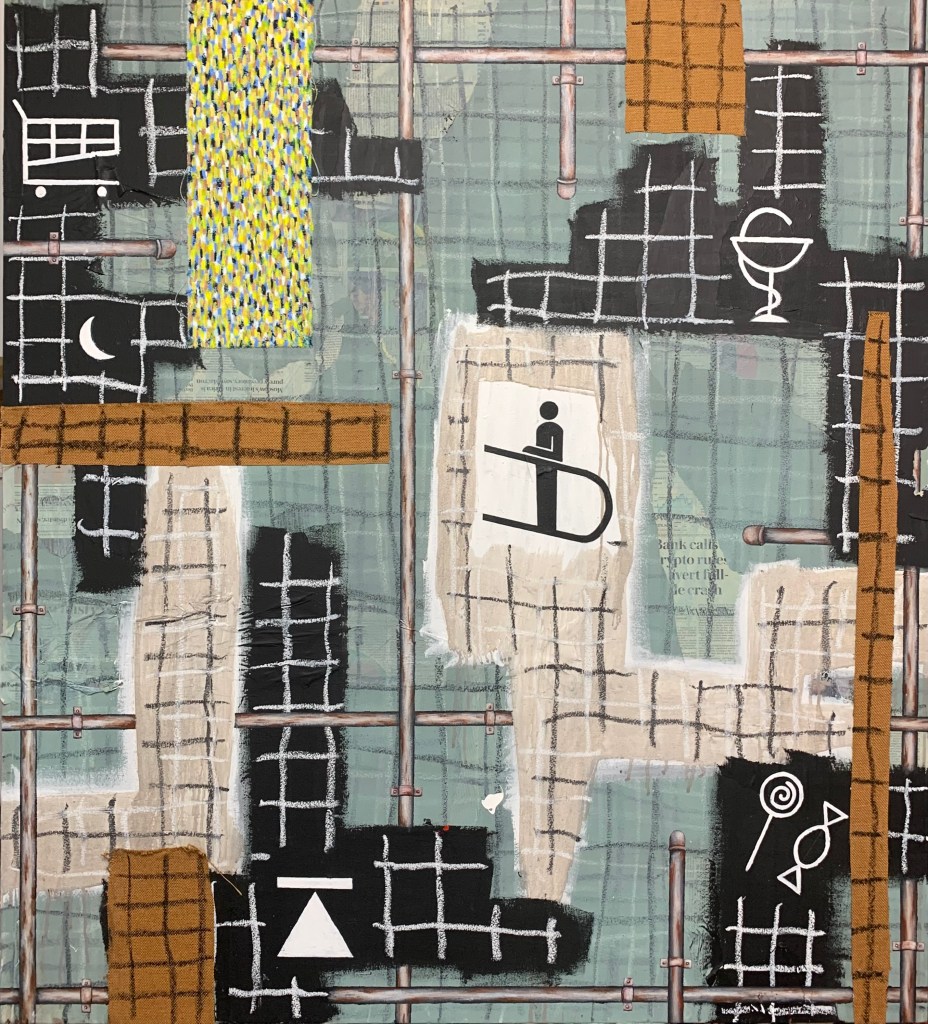
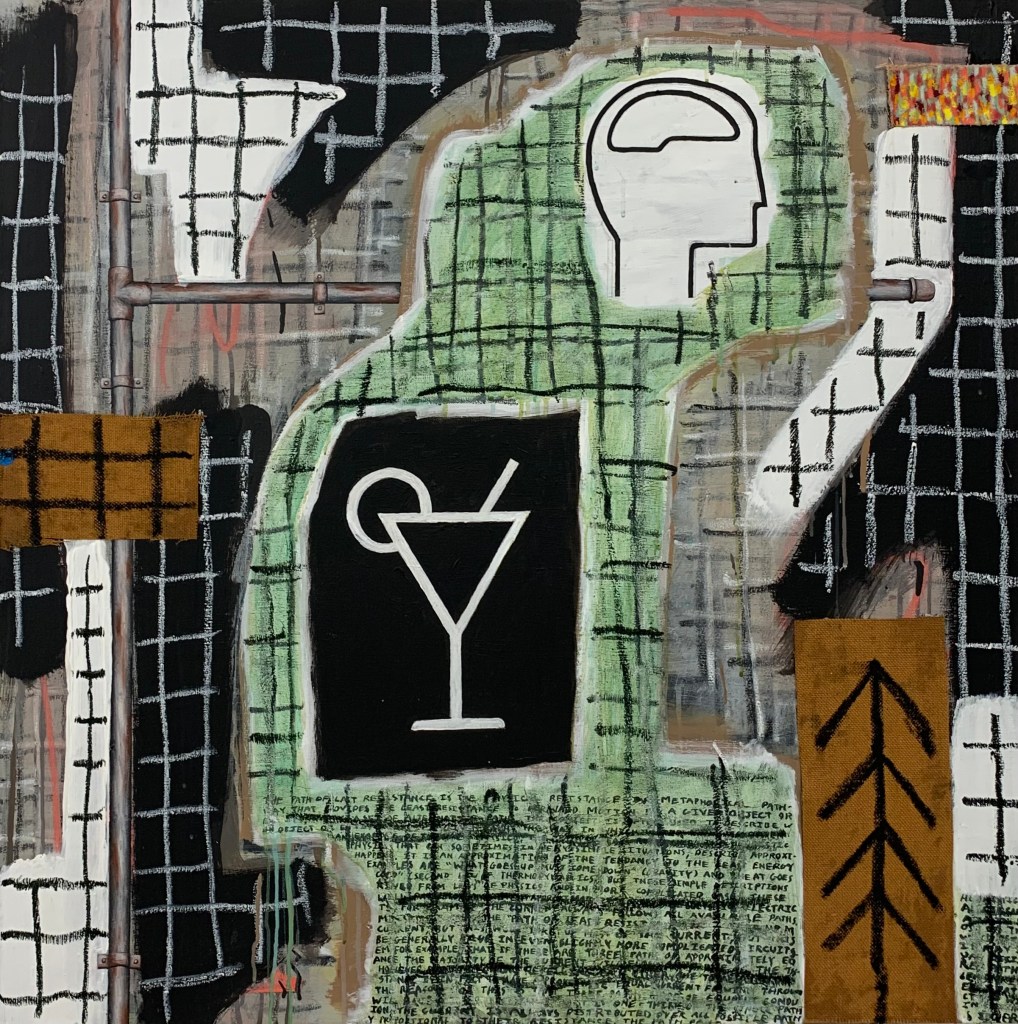
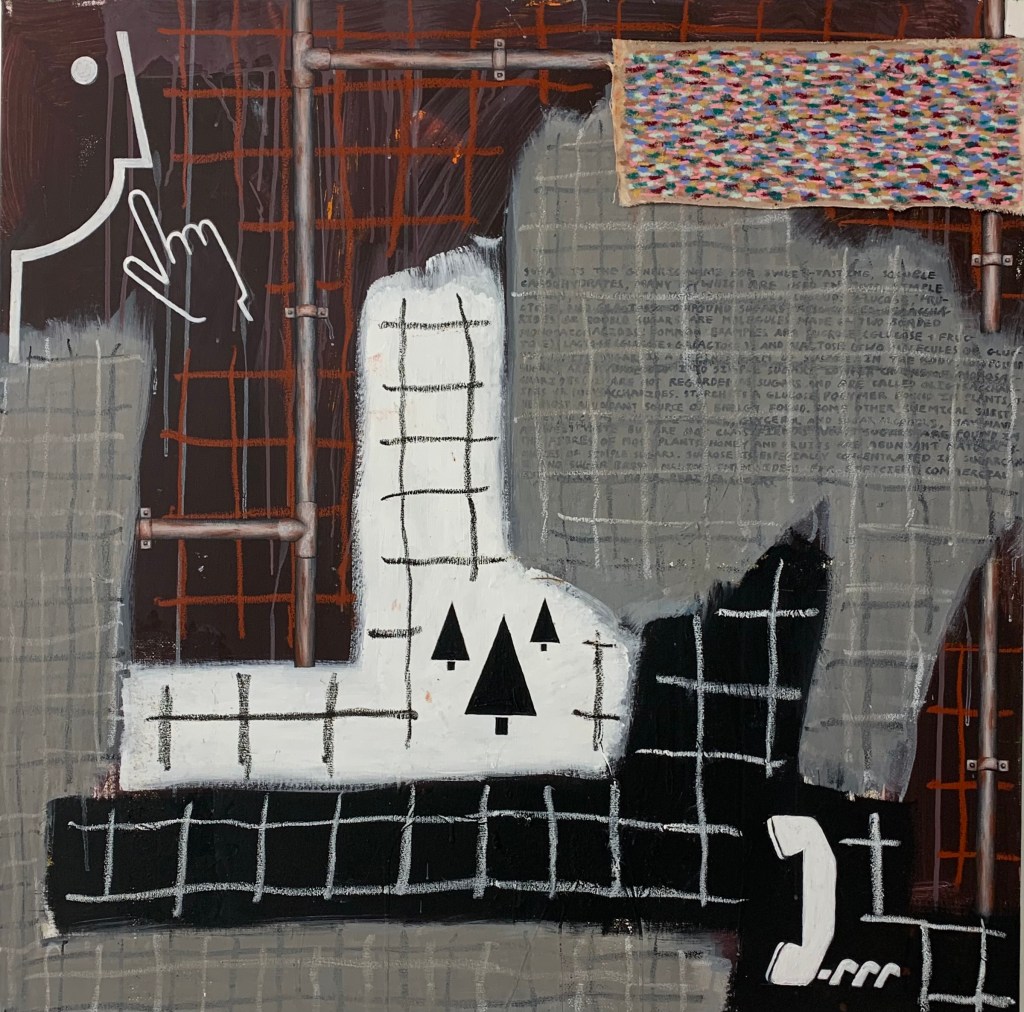
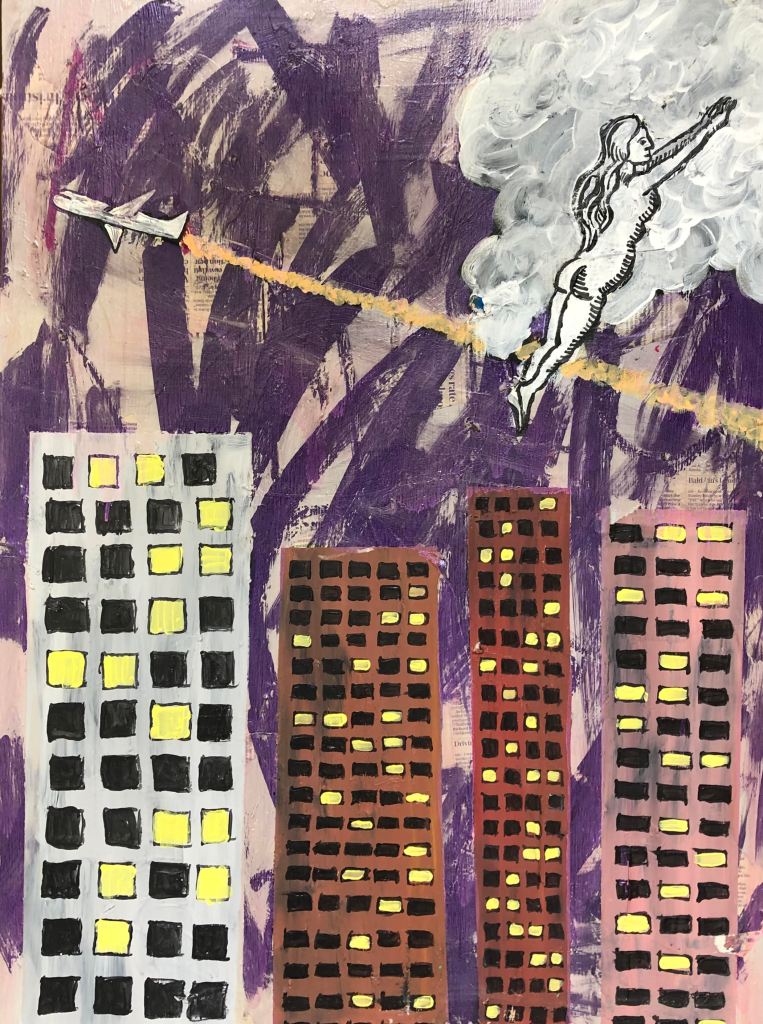
Gridmania is the feeling of being trapped within the grid, of having to comply relentlessly to its rules and sacrificing your identity for the sake of the system. Everyone is an agent of the grid and has a role to play in its function. When you go to work in the morning you pay a bus driver to take you there, who themselves has had to pay another driver to get them to work, and so on. Even such common things as flushing the toilet or putting rubbish in a bin is an act of engaging with the grid. Being a part of this system requires total submission of one’s being to survive, sacrificing hours, days, months, and years of one’s life to earn a living to partake in it, with minimal return other than bare necessities. The jobs one must do can often feel taxing, juxtaposing one’s inherent desire to be free and follow their passion. Gridmania is this juxtaposition, the cancer of the paradox. This series aims to express this sentiment and offer a relief to the spiritual depravity of the grid.
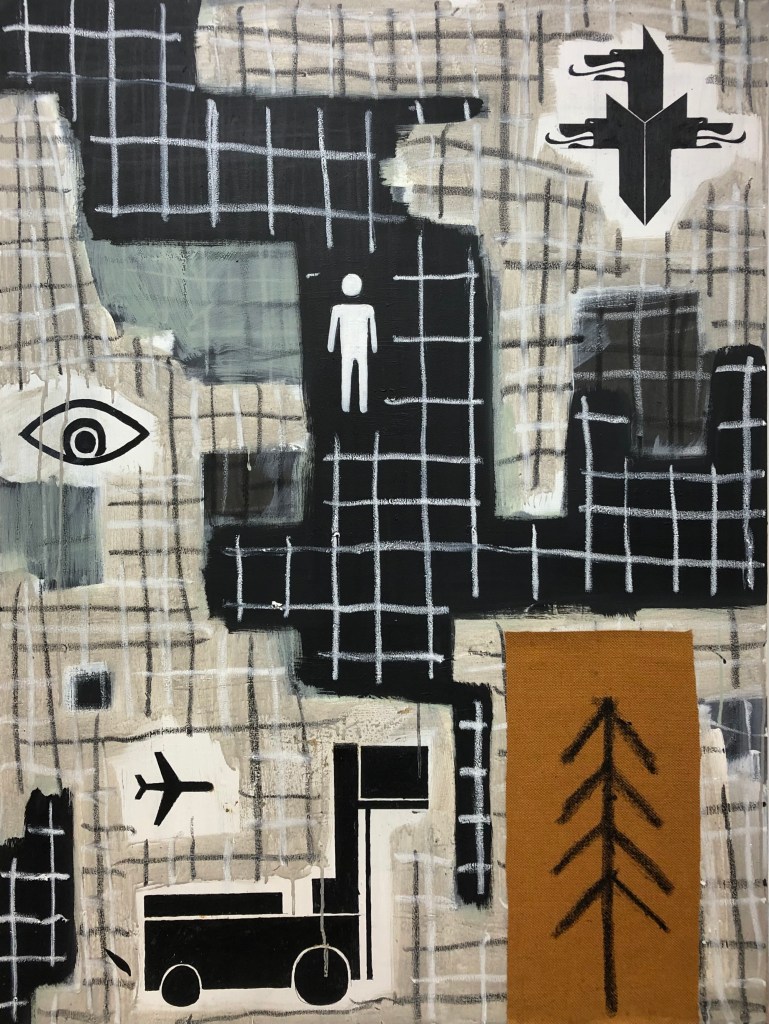
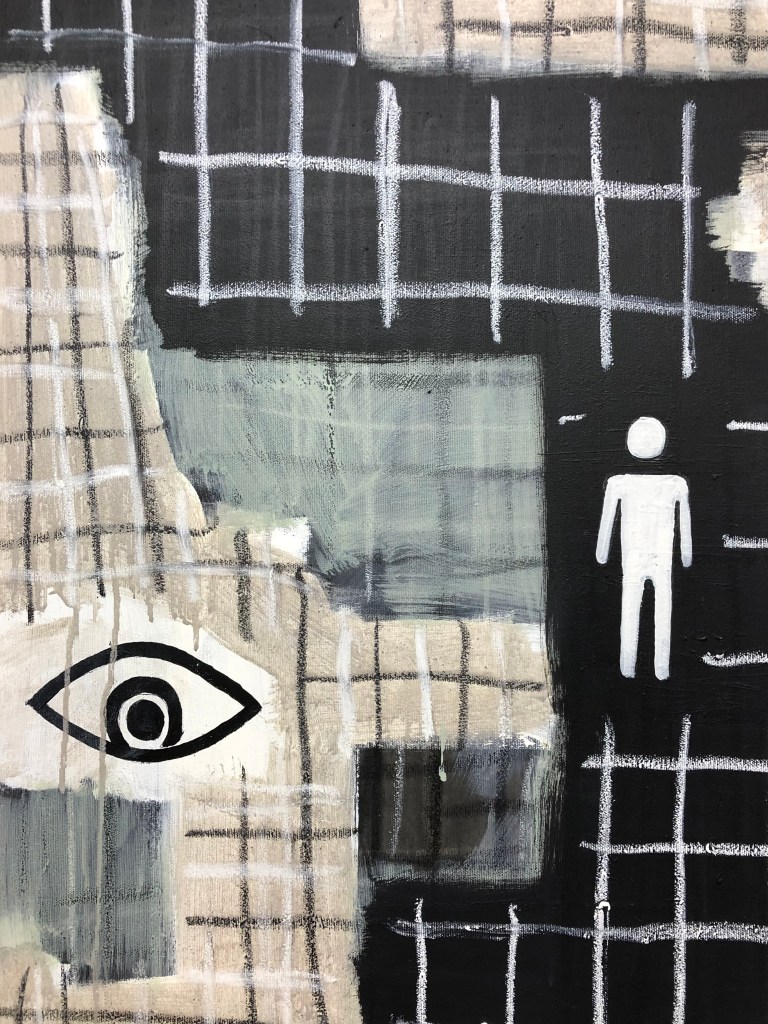
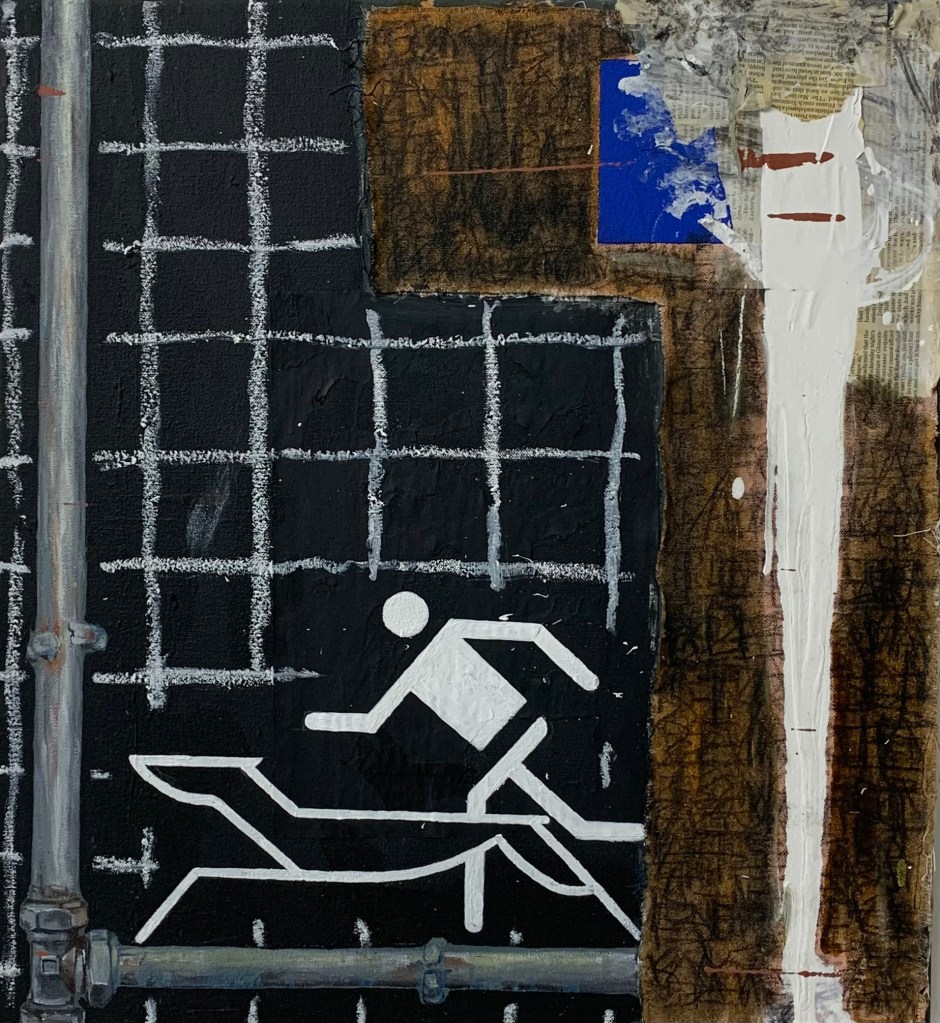
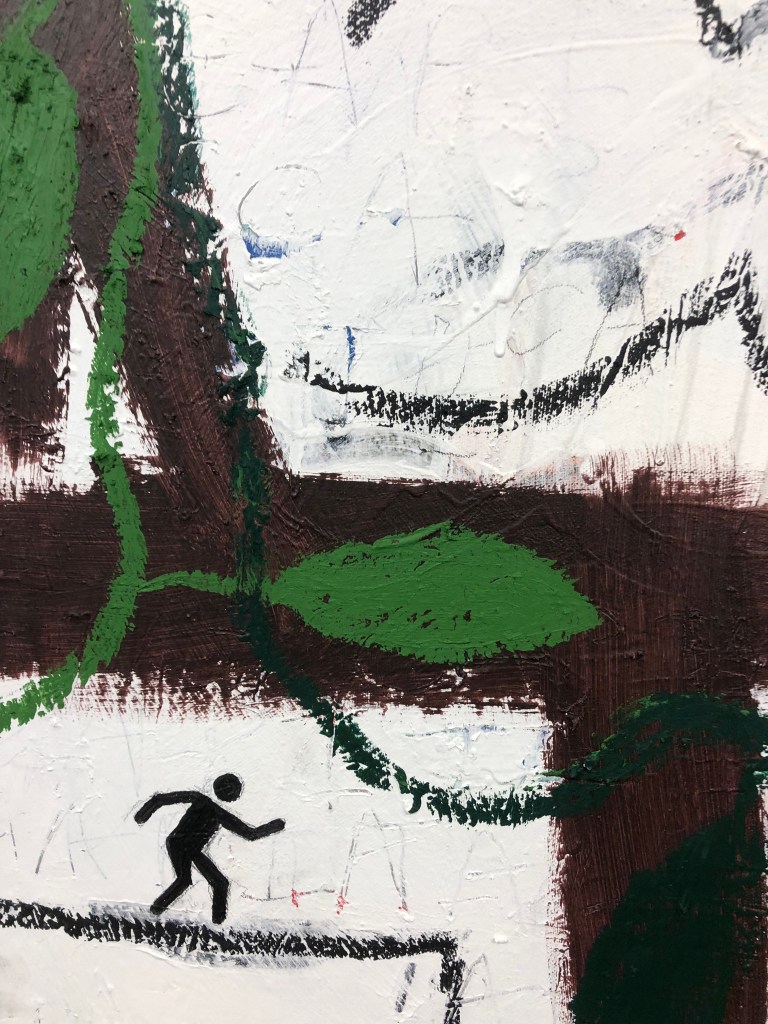
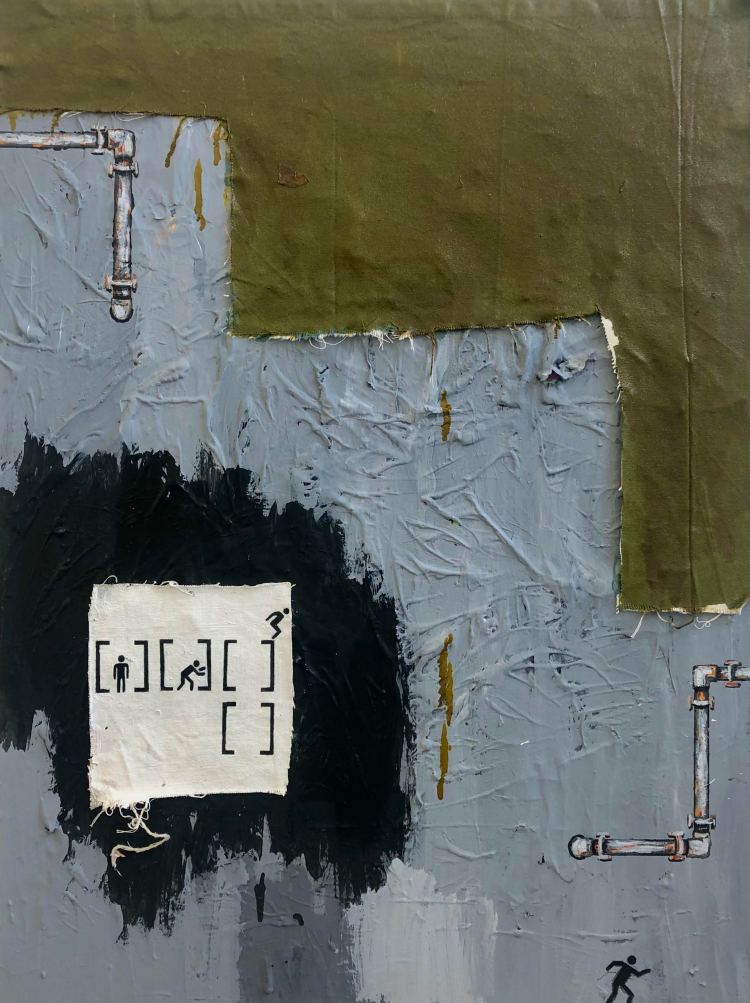
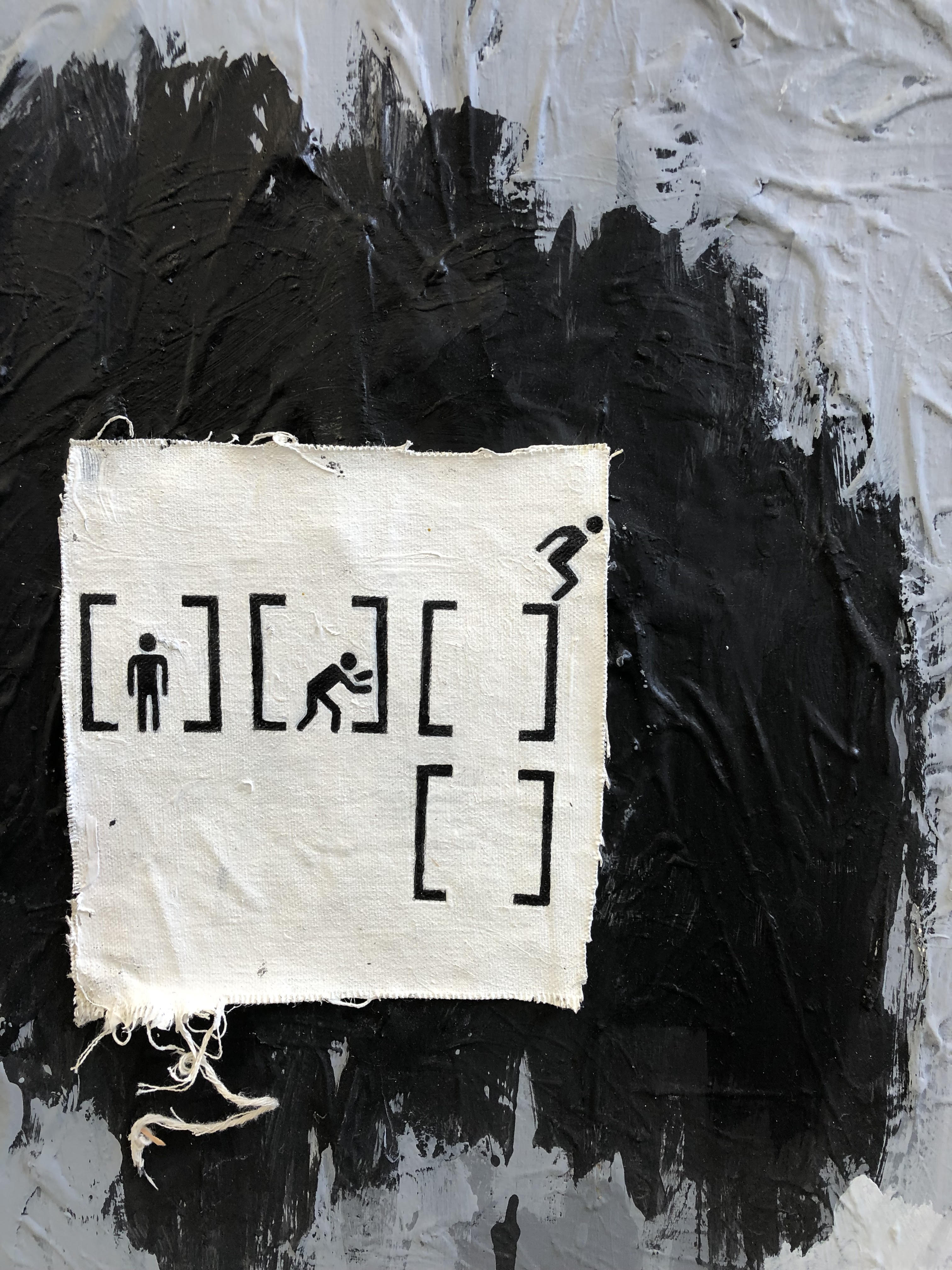
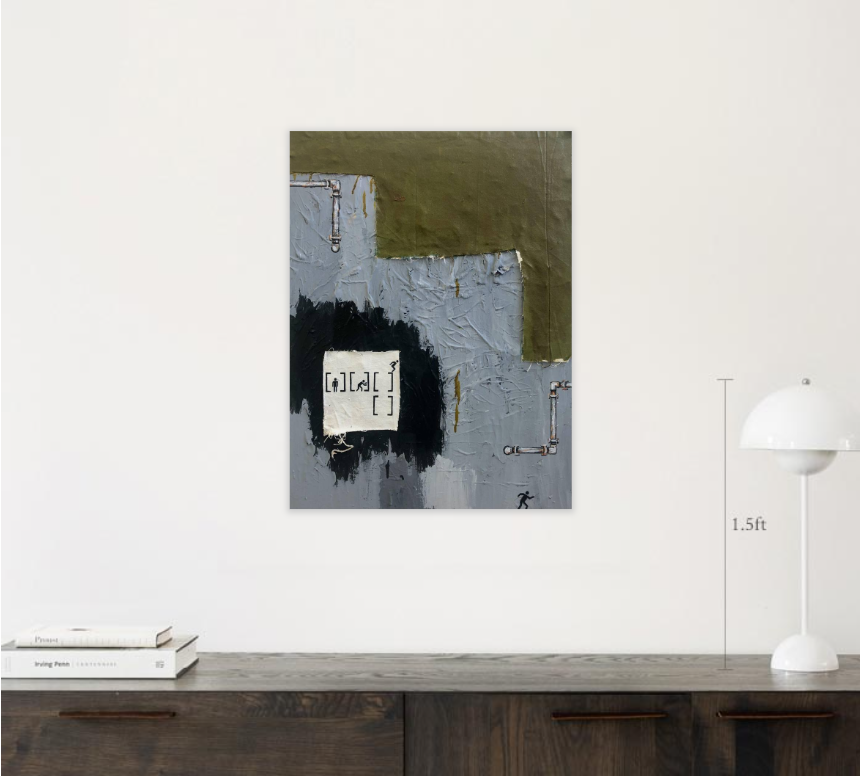
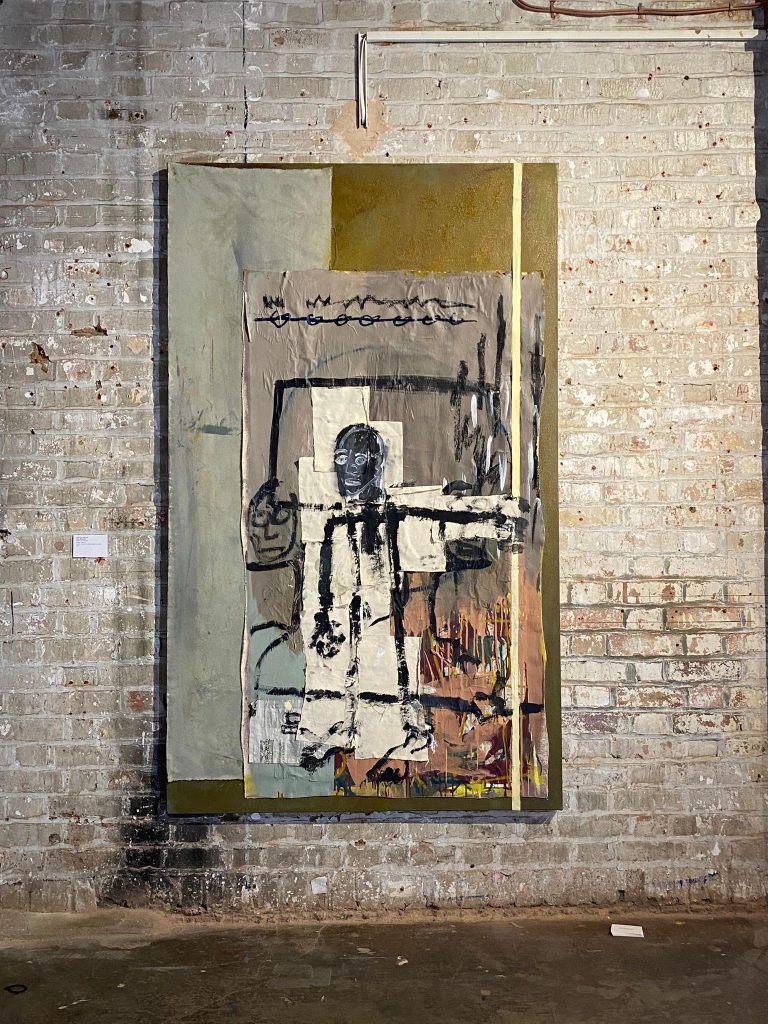
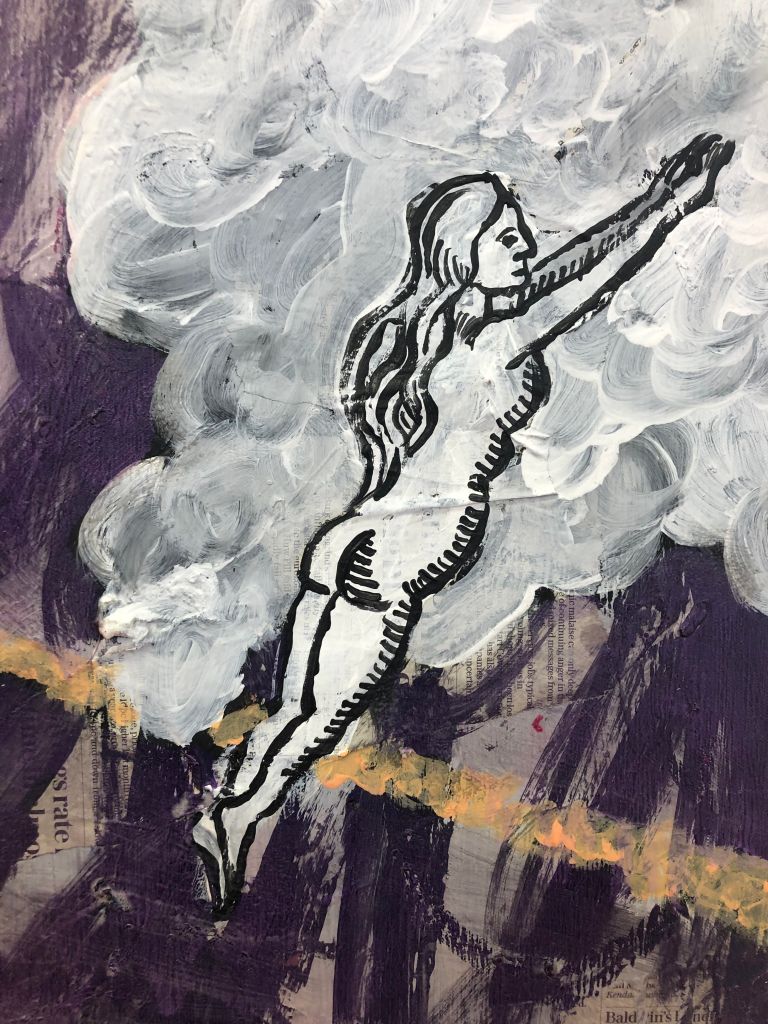
‘Escape!‘ is a portrayal of the longing to escape the constrictions of the modern world, or a journey of evading the tolls of modern life. The stick figure is a representation of the human, void of class, gender, and race, to become a symbol of the ‘hero’, running from the confines of the painting.
Each piece represents part of the journey, telling a story of the road to independence. The series intends on offering a positive representation on free will and the ability to create one’s own fate. Multiple paintings were necessary in doing justice to this grandiose theme. Typically, the theme of my work is more ambiguous, allowing for a multitude of interpretations.
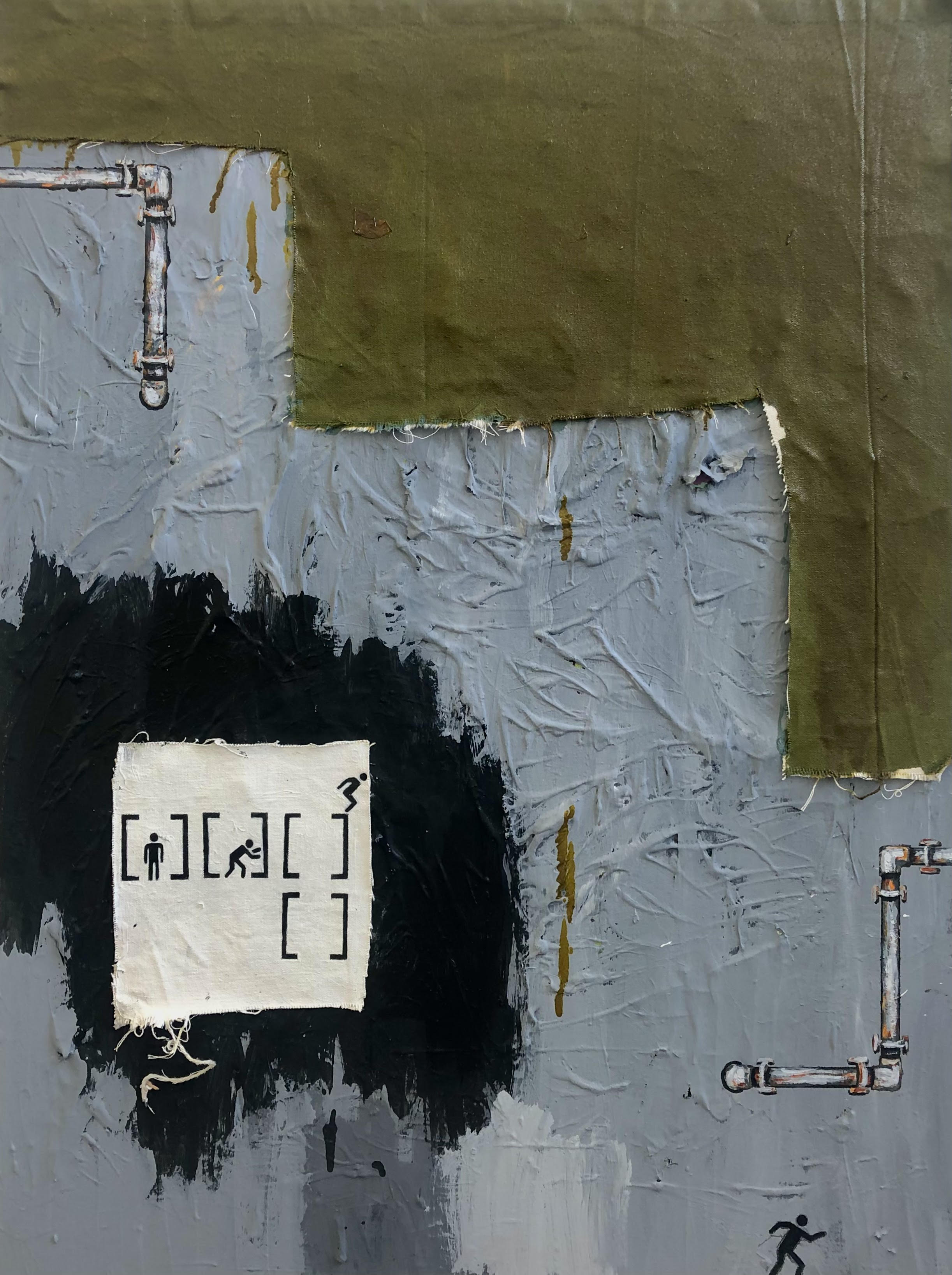
Escape!
Acrylic, oil stick, oil, and newspaper on canvas
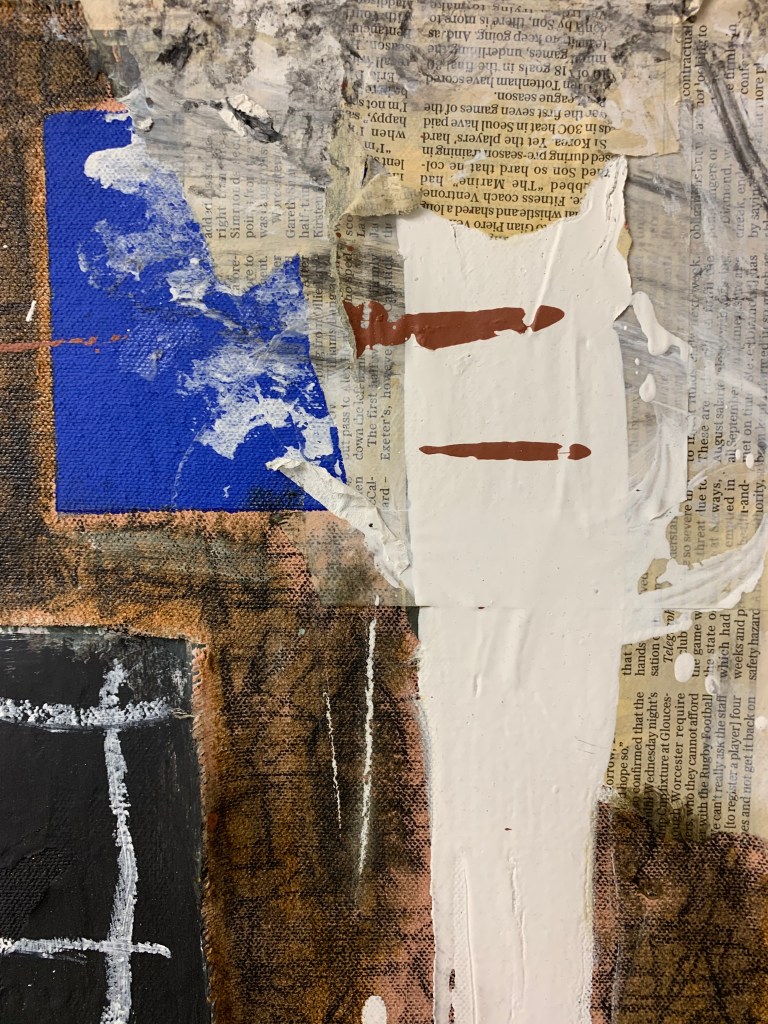
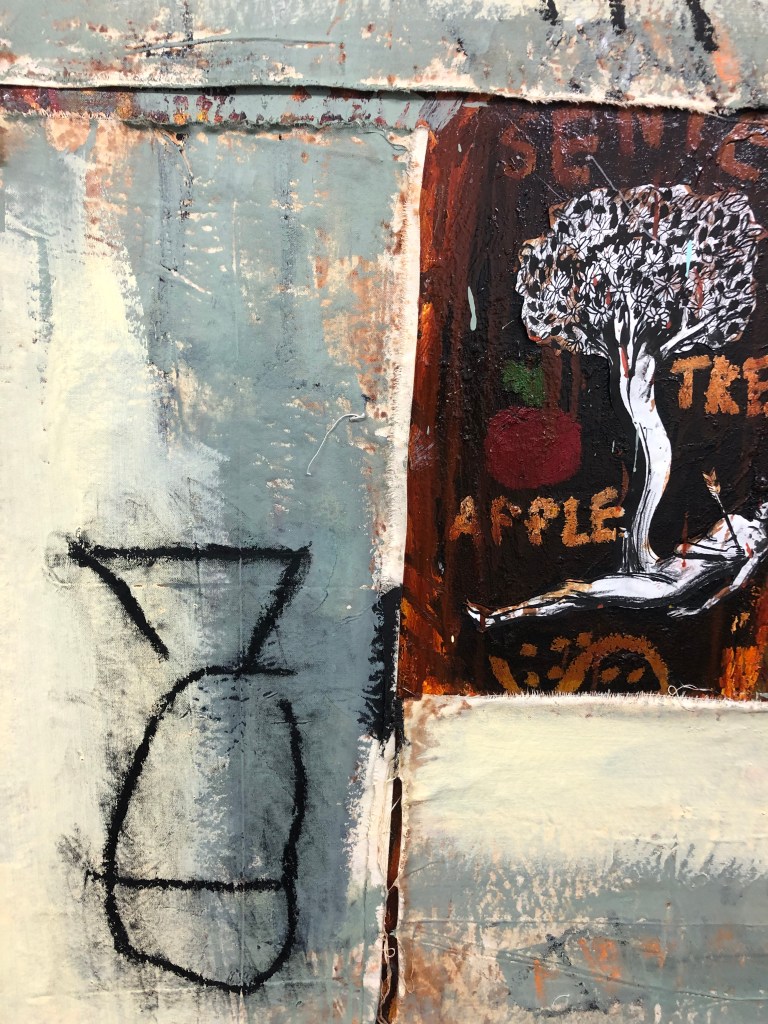
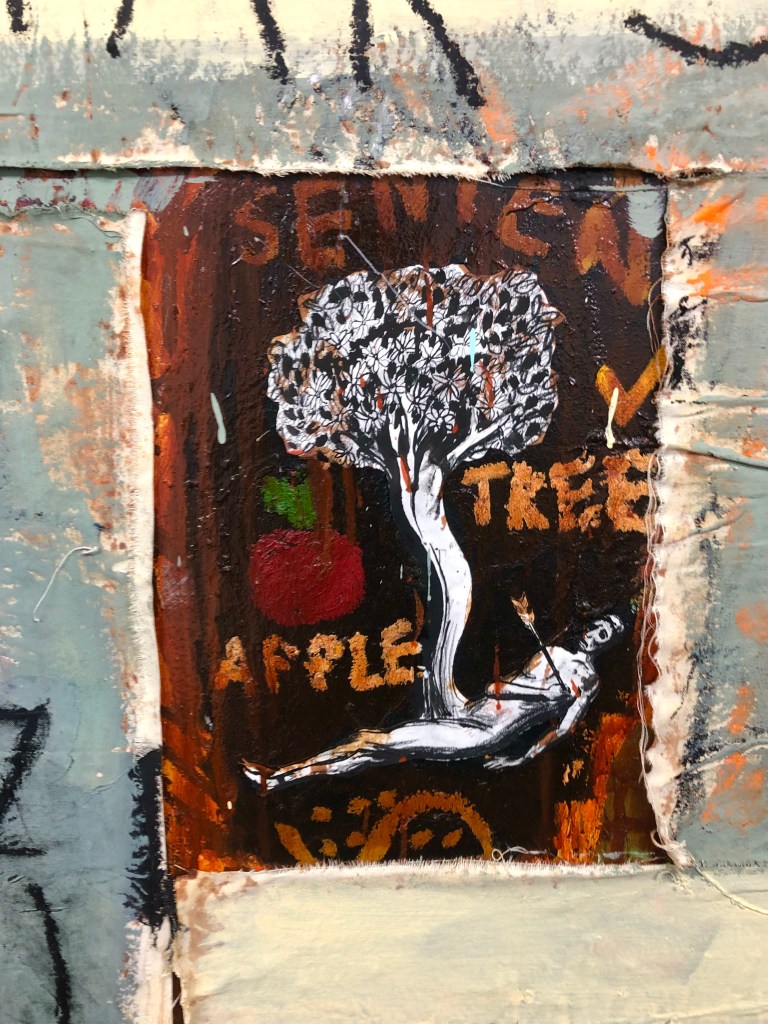
In the title piece Escape! we see the initial step our hero takes in order to escape the world they are confined to. The design of the stick figure jumping out from the box is taken from an illustration by Pippo Lionni, a designer, jazz musician, and former student of philosophy and mathematics from Paris. I also included images of rusty pipes that represent the hidden networks of pipes and wires that lie beneath walls, ceilings, and floors, much like the veins and arteries in our bodies. The rust represents decay, and relates to the organismic nature of beings which will inevitably be destroyed. Another interpretation of this work is that the hero is running from their own mortality.
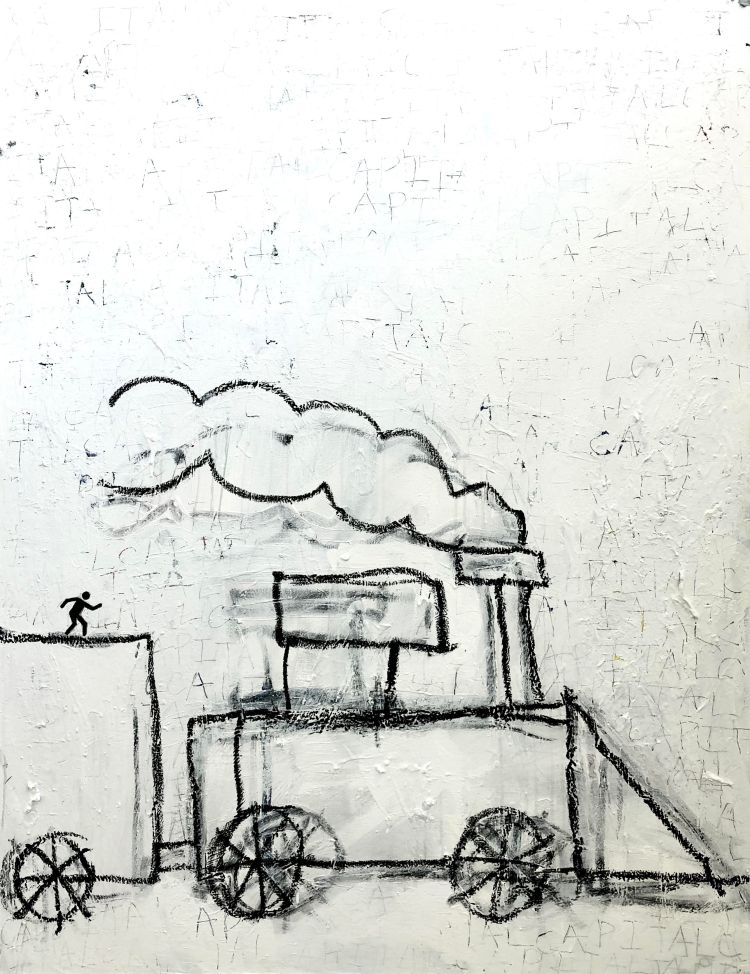
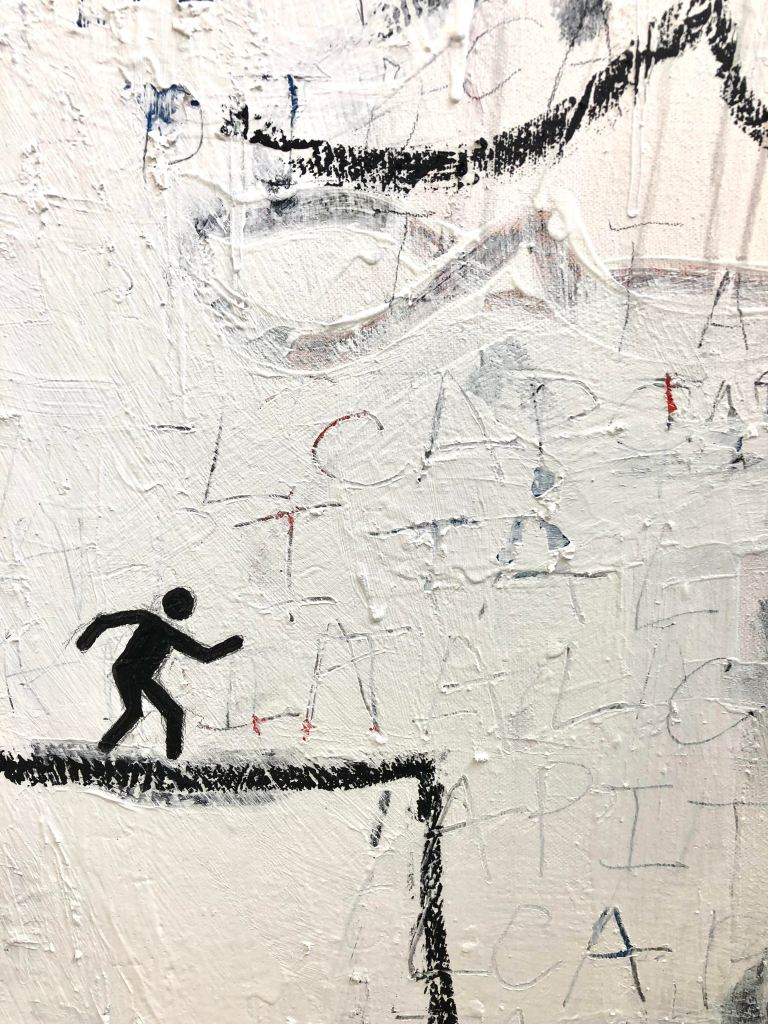
Capital
Acrylic, oil stick, and newspaper on canvas
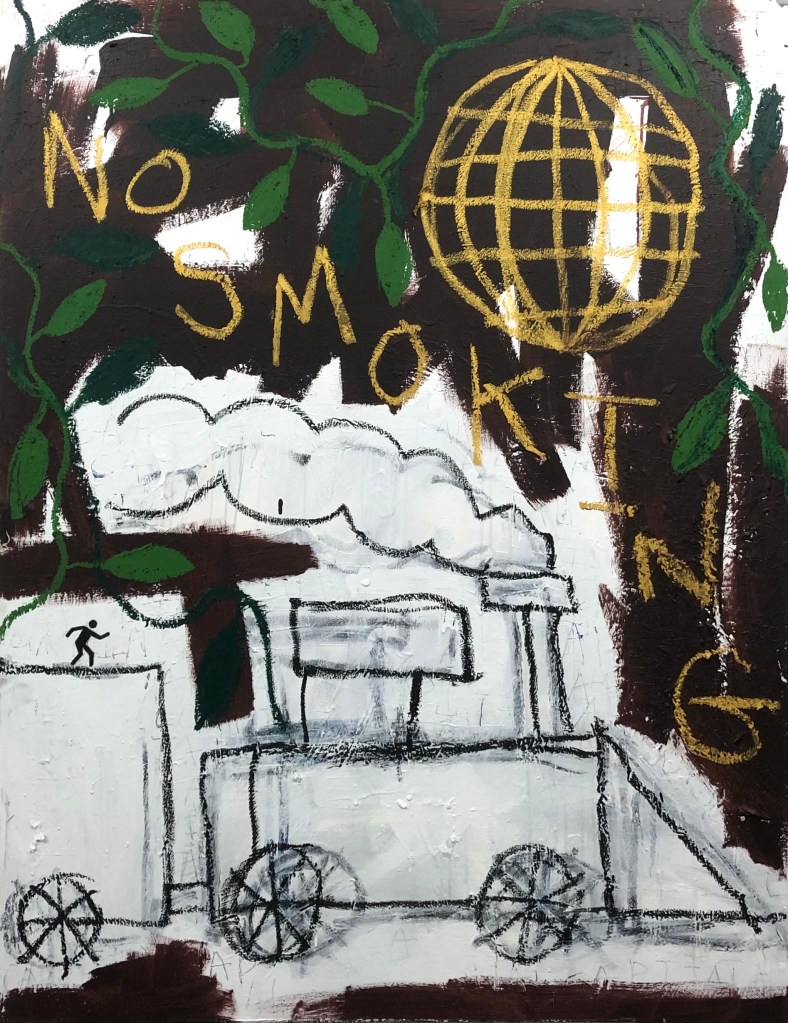
Capital represents the initial jump into the limbo. I chose to etch the word ‘CAPITAL’ into the multiple layers of the background of the work to evoke the underlying presence of capital in our modern society, its acquisition being one of the fundamental driving forces of everything we do. The train represents the constancy of progress, which is fuelled by capital. By representing this notion, the hero becomes aware of the nature of capital and learns to evade its domineering presence.
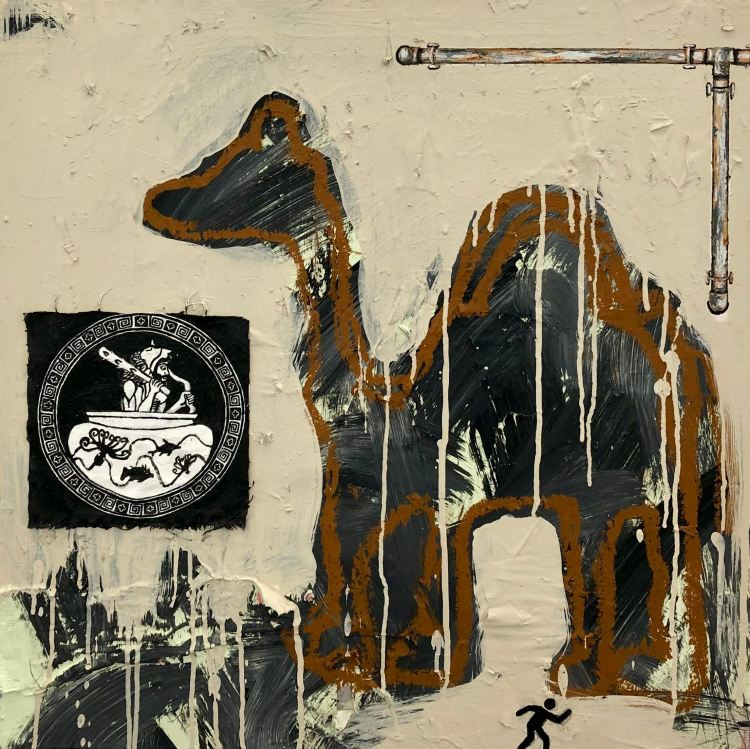
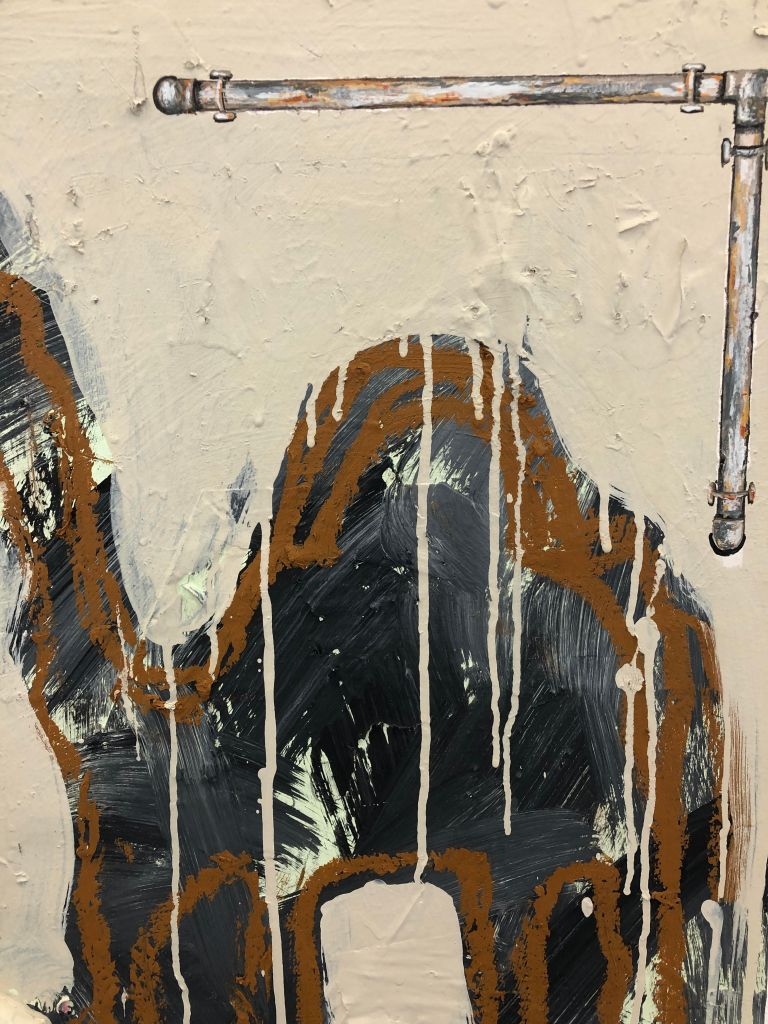
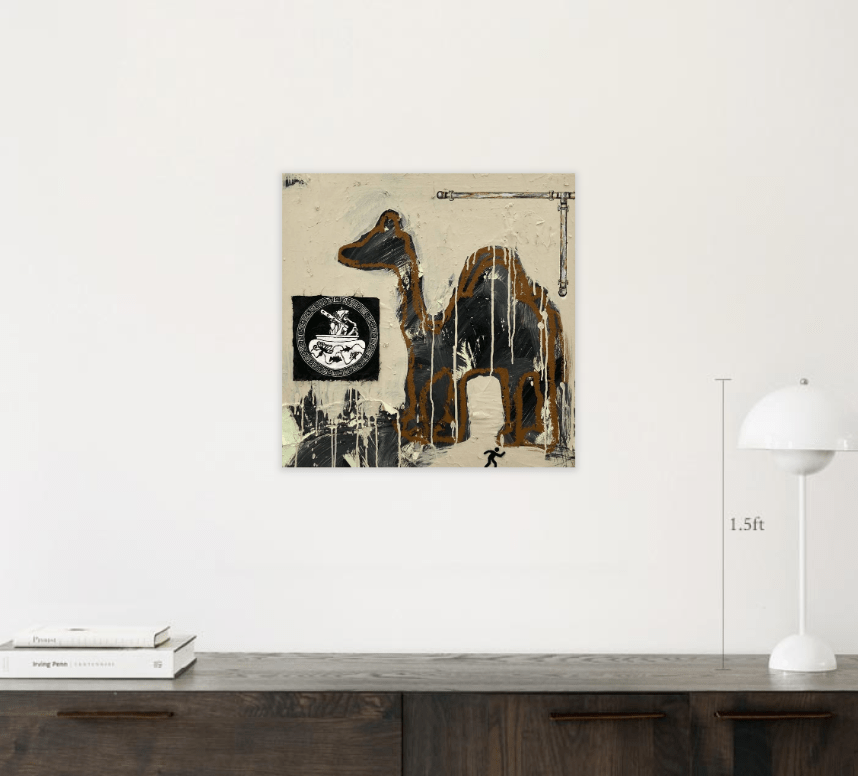
Night Sea Journey
Acrylic, oil stick, and newspaper on canvas
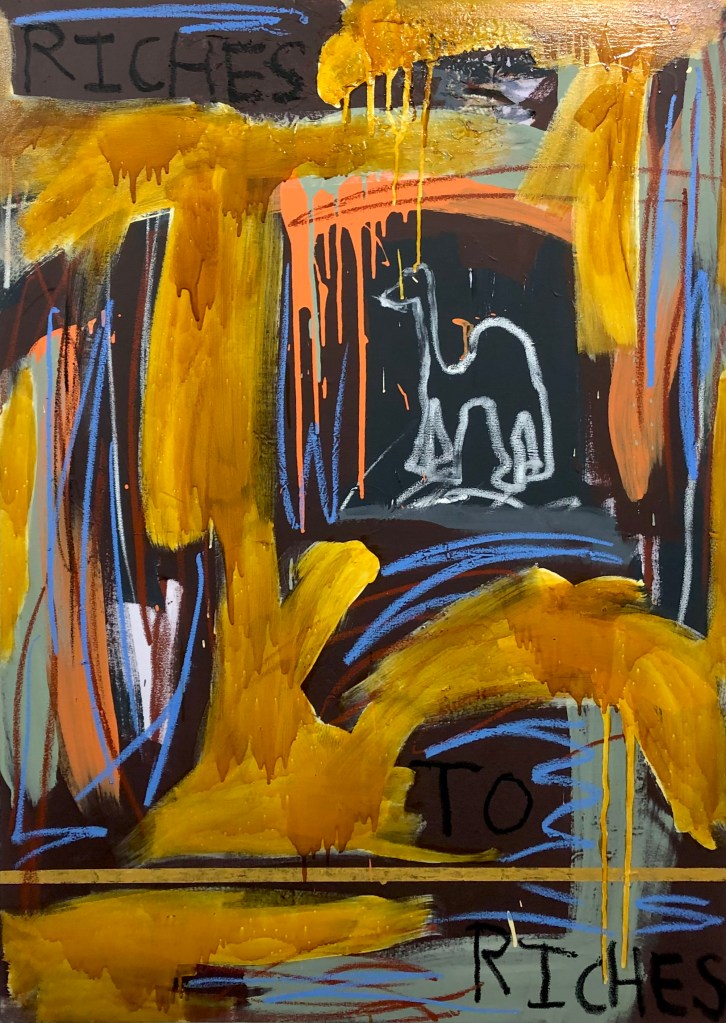
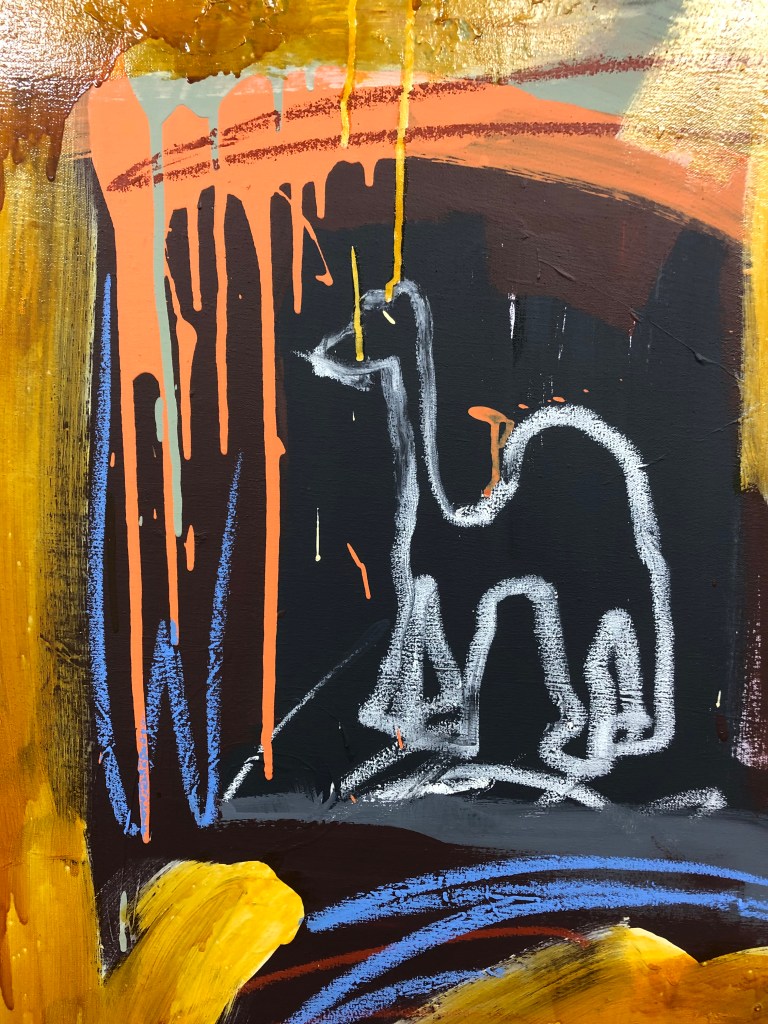
Night Sea Journey uses the journey of Hercules and the image of a camel to represent the many hours of discipline and dedication that goes into the journey. ‘The Night Sea Journey’ is a significant episode in the mythological tale of Hercules. In this part of the story, Hercules embarks on a perilous voyage to retrieve the golden apples of the Hesperides, which are guarded by a dragon. To reach the garden where these apples are located, Hercules must sail across the Oceanus, the world-encircling river that surrounds the Earth. This piece also includes the recurring motif of the rusty pipe, referencing our organismic natures and inevitable destruction.
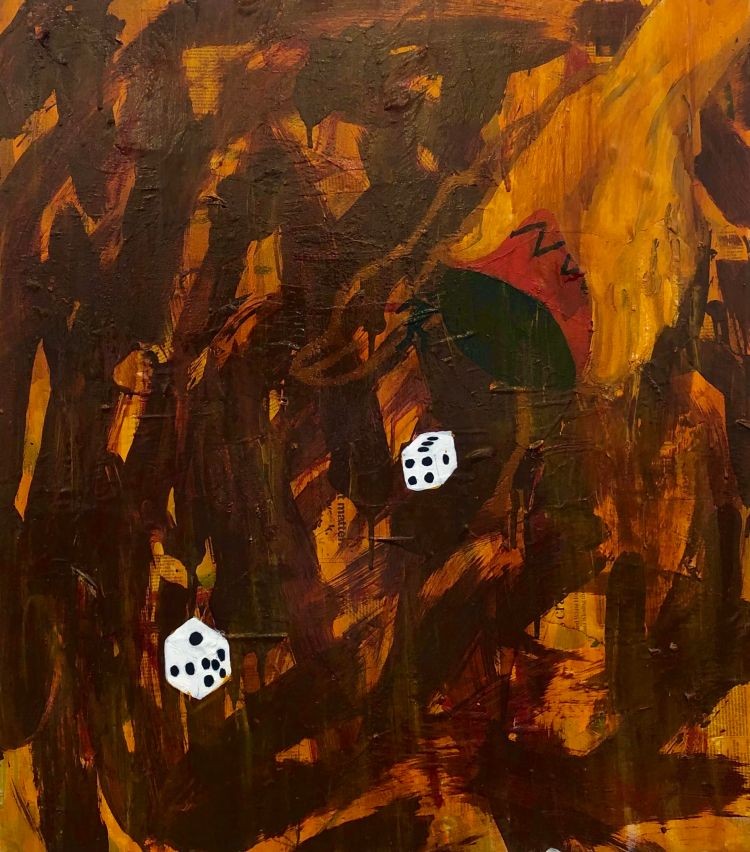
Roll the Dice
Acrylic, oil stick, oil, and newspaper on canvas
And finally, the dice in ‘Roll the Dice’ represents the luck or chance of escaping. In this part of the journey, I was trying to suggest that one creates their own luck by taking the initial chance. With enough dedication and persistence, escaping can be achieved.
In creating this series, I hope to engage the audience by telling a story. I hope that one could see themselves in the figure occurring throughout the works and relate it to their own life’s journey, finding solace in the long, winding road to freedom.
Silvia Federici is an Italian-American scholar, feminist, and activist known for her significant contributions to the fields of feminist theory, political economy, and social activism. Born in 1942 in Italy, she has played a pivotal role in advancing the understanding of gender, capitalism, and labor, particularly in the context of women’s struggles.
“Caliban and the Witch” is a significant work that challenges conventional historical narratives and offers a feminist perspective on the intertwined histories of capitalism, patriarchy, and the persecution of women as witches. It explores how gender and class oppression intersected during this period and continues to influence contemporary discussions on feminism, capitalism, and social justice.
One of the key facets of Fedirici’s book is her adaptation of ‘primitive accumulation’, a term Marx coined in his book ‘Das Capital’.
Primitive Accumulation
Primitive accumulation is the separation of the working class from the wealth and prosperity of the upper classes which is marked as the birth of Capitalism, occurring at the end of the 15th Century to the end of the 18th. Marx refers to the mass murder of Indigenous people in the Americas, the plundering of India, and the trade in African slaves—”these idyllic proceedings are the chief moments of primitive accumulation.”
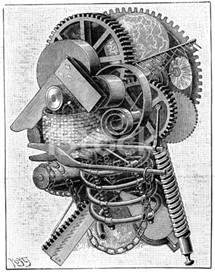
After reading this book I was surprised at how many historical revelations in thought and science were negative in terms of their impact on esoteric, holistic cultures and practices. For example, Cartesian Dualism and the scientific method birthed a mechanistic view of nature and the body which paved the way for the new Natural Philosophy which said the body was a machine that could be controlled and restrained through mental discipline.
A Telling example of the new mechanical conception of the body is this 16th century German engraving where the peasant is represented as nothing more than a concoction of cogs and tubes.
Marx typically described examples of primitive accumulation from an economic perspective, such as financially crippling the working class through high living costs and low salaries. Fedirici offers alternatives such as the repression of women and contemporary theories of thought such as Cartesian Dualism. I will dissect these two themes in more detail.
Cartesian Dualism
Cartesian Dualism was a concept popularised by Rene Descartes that stated that mind and body were two entirely different entities and could exist one without the other. Fedirici uses this development in thought as an example of primitive accumulation which I found to be incredibly sensical.
She states that Cartesian Dualism laid the grounds for the alienation from the body, which Marx saw as a distinguishing trait of the capitalist work relation. As said by Fedirici, “By transforming labour into a commodity, capitalism causes workers to submit their activity to an external order over which they have no control and with which they cannot identify.” (Caliban and the Witch, The Great Caliban, pg. 142)
This form of control manifested in several ways. Fedirici states that, “Many practices began to appear in daily life to signal the deep transformations occurring in this domain: the use of cutlery, the development of shame with respect to nakedness, the advent of ‘manners’ that attempted to regulate how one laughed, walked, sneezed, how one should behave at the table, and to what extent one could sing, joke, play (Elias 1978: 129ff).” (Caliban and the Witch, pg. 168)
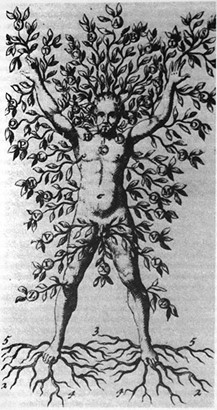
J. Case, Compendium Anatomicum (1696).
In contrast to the ‘mechanical man’ is the image of the ‘vegetable man,’ in which the blood vessels are seen as twigs sprouting from the human body.
This period marks the death of holistic and esoteric cultures and practices such as Alchemy and herbal sciences, severing an essential bond humans had to nature. In doing so, mathematics and science became the primary mode of understanding and nature became something to be conquered rather than loved and cherished.
Fedirici says, “the machine was becoming the model of social behaviour” (Caliban and the Witch, pg.157) which is reminiscent of Andy Warhol’s machine-like process of producing art. Andy told Time in 1963 that, “Machines have less problems. I’d like to be a machine, wouldn’t you?”
This quote is the end result of the effect of Cartesian Dualism which not only separated mind from body, but working class from upper class, and worker from freedom.
The Repression of Women
One key component of this period of primitive accumulation that is skimmed over in Marx’s ‘Das Capital’ is the oppression of women. Fedirici emphasises its impact in her book, uncovering its deep roots that still have effect on the world today. This is a time in history that the severity of its consequence is so easily glanced over.
In this period of primitive accumulation woman were excluded from the labour force and forced into the home through many means, such as the loss of control over sex, wages and their rights through the stigmatisation of their characters. Women were not even allowed to represent themselves in court, being declared legal ‘imbeciles’. Husbands gained control over their finances, rape was legalised against proletarian women, and they were not allowed to own anything. It was a truly horrendous period of time for women.
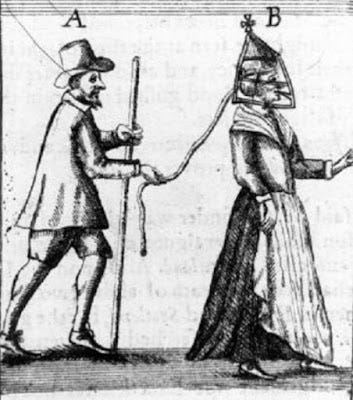
Fedirici talks of how this was a means of giving working class men a perceived control over their lives through the oppression of their wives in order to quell their revolutionary spirits and channel it towards their kin. Women became the enemy, not the upper classes. They did this by ridding Women of their humility and humanity, treating them like pets. An example of this is the punishment of the bridle, shown below, which was used on women with a ‘sharp tongue’. As a result women lost all power of resistance. As Fedirici says, “The definition of women as demonic beings, and the atrocious and humiliating practices to which so many of them were subjected left indelible marks in the collective female psyche and in women’s sense of possibilities.” (Caliban and the Witch, The Accumulation of Labor and the Degradation of Women, pg. 117)
A scold is paraded through the community wearing the ‘bridle’, an iron contraption used to punish women with a sharp tongue. Significantly, a similar device was used by European slavetraders in Africa to subdue their captives and carry them to their ships.
Conclusion
This is an extremely important book that uncovers parts of History that have been hidden under the rug, but have residue that lingers in the air. This is a book that I will read many, many times and each time it will still have the same gut-wrenching effect. Fedirici exposes a past so vile and wicked that even the most twisted of dystopic authors could not imagine a world so plagued with injustice and cruelty.
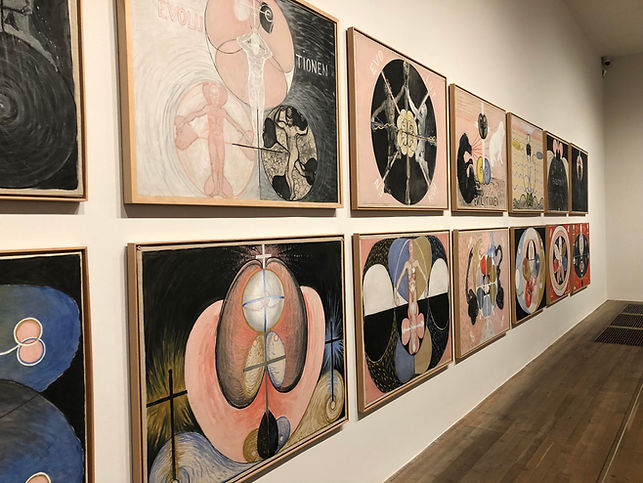
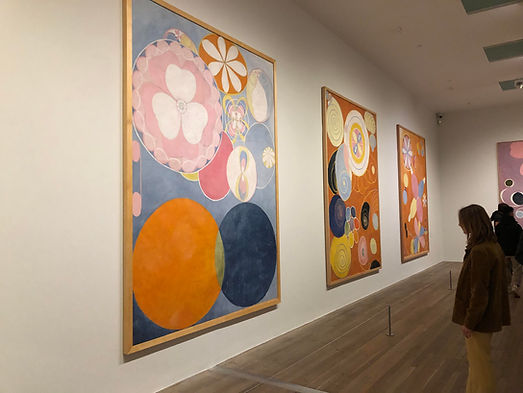
During the time of creating my latest series of work I went to see the exhibition of Hilma Klint and Piet Mondrian at Tate Modern. Both painters went through dramatic transitions throughout their careers in painting, beginning with very typical styles such as landscapes and still lives to completely unique and individual conceptual practices heavily related to the blooming culture of spirituality occurring during their lives.
One of the information texts in the exhibition stated, “The late nineteenth and early twentieth centuries marked a significant shift in concepts of spirituality as a reaction against materialism.” Scientific theories established by prominent thinkers such as Charles Darwin and Albert Einstein denounced the conception of the Universe being created by a singular creator and suggesting the existence of a world beyond our perception.
One of the main principles of alchemy is the existence of an inner world that gives life to all that exists. Perhaps this is why Klint’s work had such parallels to the aesthetic of alchemical artwork.
A quote from Mondrian states that, “All religions have the same fundamental content, they differ only in form. The form is the external manifestation of this content and is thus an indispensable vehicle for the expression of primary principles.” This relates to alchemy in the sense that although it had no grounding to any fundamental truths it was still universal in that it expressed the human urge to build a framework by which to understand and harness the capabilities of nature.
What Mondrian and Klint expressed in their styles is a close expression of the archetypal principle of art as a way of making the, ‘true beauty of nature visual, tangible, and above all, perceptible.’
Overall, I found this exhibition to be extremely interesting. It highlighted a dramatic shift in the way art was perceived and utilised. Mondrian and Klint decided to use it as a means of expressing their spiritual ideas and understandings of the way the Universe worked, moving against the traditional rudiments that art had been bound to for so long.
It is in this sense that their work still maintains a sense of modernity as they were so far ahead of their time that the full depth of their vision is only being fully grasped now. This exhibition taught me to not be afraid to work outside of what is considered acceptable and make work that is true to myself and my ideals.
My most recent series of paintings, ‘Alchemy, Mysticism, and Pictograms’ have been inspired by the book ‘Alchemy & Mysticism’ which contains a catalogue of the esoteric art of the Middle Ages, giving in-depth details of the nature and reasoning behind the pieces. Art for the alchemist was not merely a job of creating an image, but a recounting of the process of extracting spirit from matter. Each piece of art reflected the divinity of these sacraments, making them like scripture.
They were created as etchings to be printed and distributed meaning they were composed of intricate line work done with a chisel.
Most pieces were considered recipes rather than artworks which means they are littered with words and instructions. Its amusing reading the chaotic revelries of these mad scientists as they described what at the time were seen as advanced concepts.
They were produced just on the cusp of the Renaissance, which evolved perspective and landscape dramatically from the traditional flat perspective. This means most of their works maintain an archaic mode of depicting space.
Religion is a fundamental glue to alchemy’s framework. At the time alchemy was at its most popular, religion was the primary mechanism for understanding the Universe, anchoring alchemical theory to religious dogma. As said by Bernouilli, “… if we are to fathom the true meaning of alchemy, we must view it not as an isolated phenomenon but in conjunction with related disciplines.”
I will discuss the elements of alchemy that I have been intrigued by and how they have informed my work and my viewpoint on the purpose of art and spirituality in our modern context.
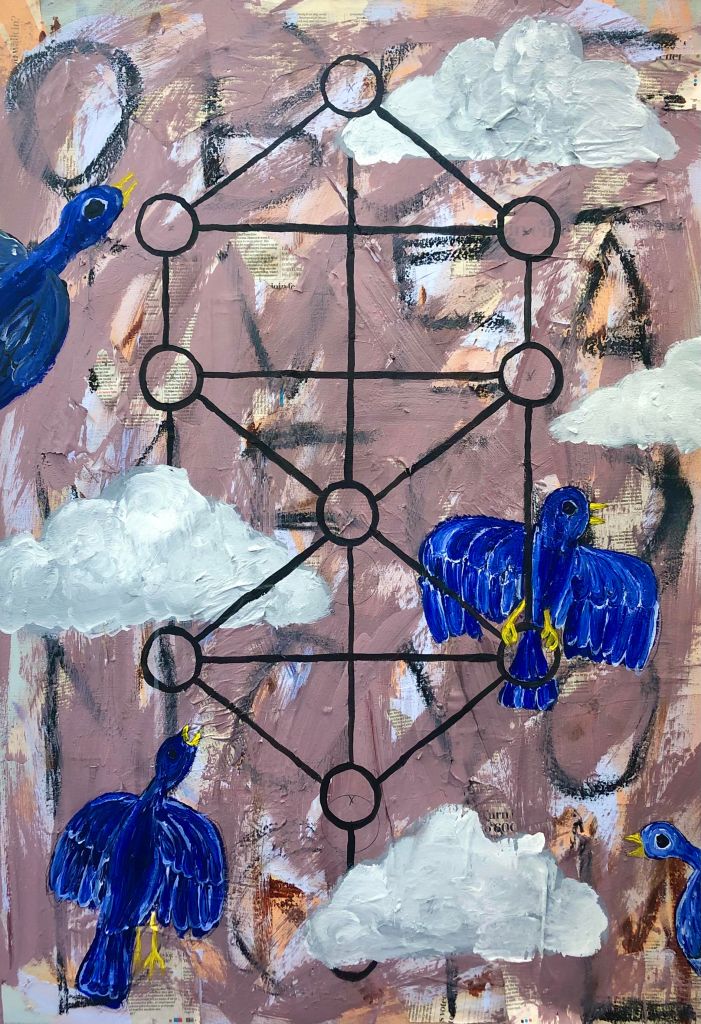
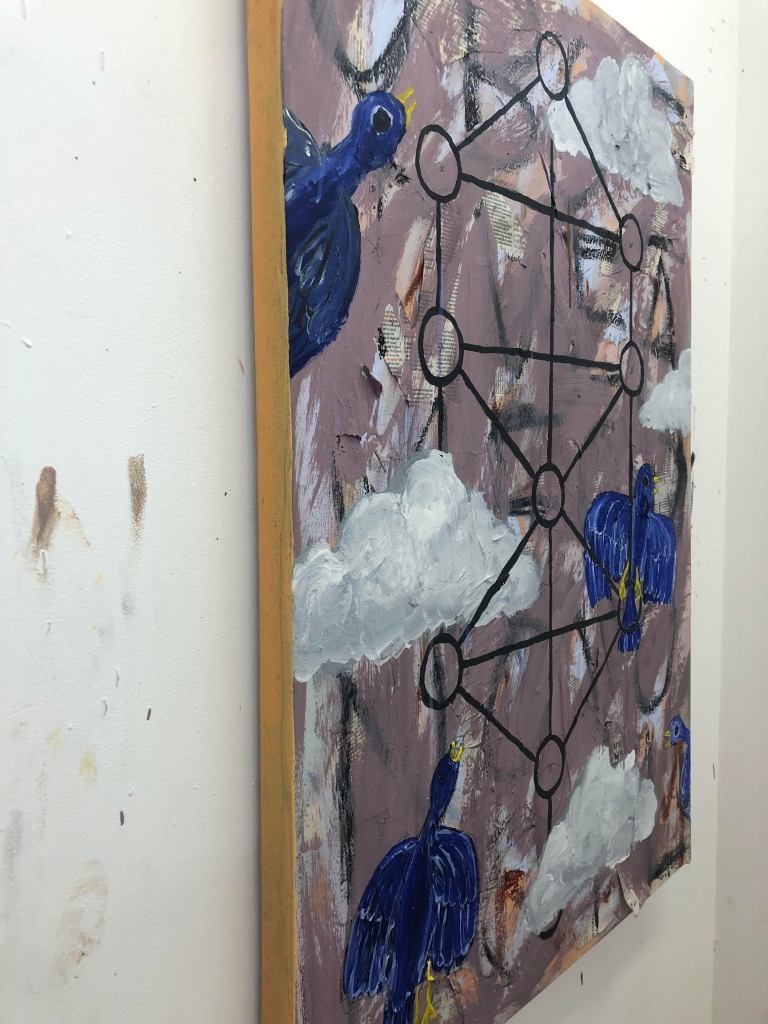
Sephiroth
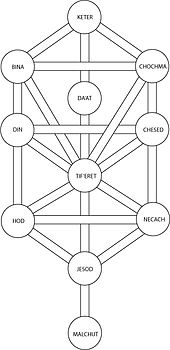
“The Sephiroth tree is at the core of the Cabala, its most influential and multi-layered symbol. The Sephiroth are the ten, primal numbers which, in combination with the twenty-two letters of the Hebrew Alphabet, represent the plan of creation of all upper and lower things.” (Alexander Roob – Alchemy and Mysticism – Sephiroth – pg .262)
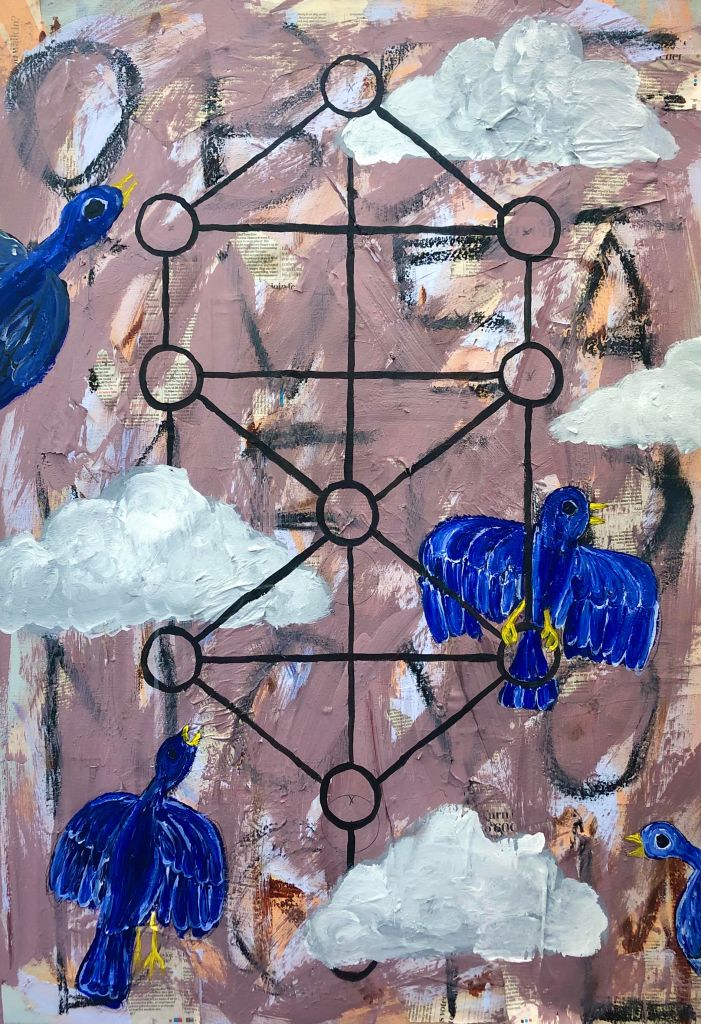
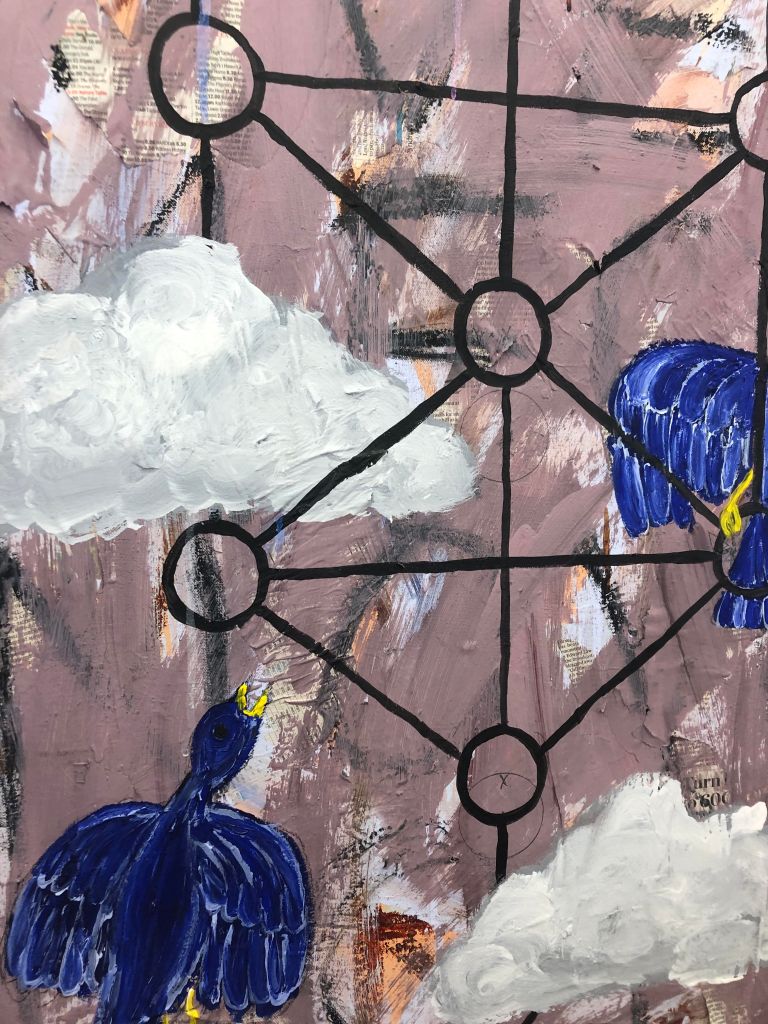
For my piece ‘Sephiroth’ the Sephiroth tree is prominent. This symbol bares copious amounts of spiritual significance, originating from Kabbalah which comes from medieval Judaism. The symbol is made up of ten ‘nodes’ which are connected by pathways and separated into three categories. Each node represents a part of the human psyche, existence, or God.
The pathways usually represent the different means of travelling from one node to another, with the final node being the ‘Kether’ which is the supreme crown. If any of the pathways are blocked, one can only dwell in the lower nodes which is the cause of all evil and treachery. One must be diligent in keeping all 22 pathways clear to allow for spiritual cohesion of all 10 nodes.
The Sephiroth Tree
Sephiroth
Acrylic, oil stick, newspaper on canvas
2023
I utilised the Sephiroth due to my intrigue in spiritual symbolism. It has similarities to other diagrammatic expressions of the journey to enlightenment in other spiritual practices, such as Kundalini in Hinduism. In Alchemy and Mysticism, it says, “The Sephiroth forms a holistic system in which the whole propagates and reflects itself infinitely into its tiniest particles… the Sephiroth encompasses all possibilities and all combinations of the world of elements.”
We live in a spiritually depraved society, and my attraction to these holistic and eclectic mixes of religious iconography is an unconscious reaction to a lack of fulfilment to my spiritual needs. This spiritual regression is identified by Silvia Fedirici in her book ‘Caliban and the Witch’ as being a supplement of the birth of Capitalism. In her book she says, “We can see, in other words, that the human body and not the steam engine, and not even the clock, was the first machine developed by capitalism.” (Silvia Fedirici, Caliban and the Witch, pg. 158)
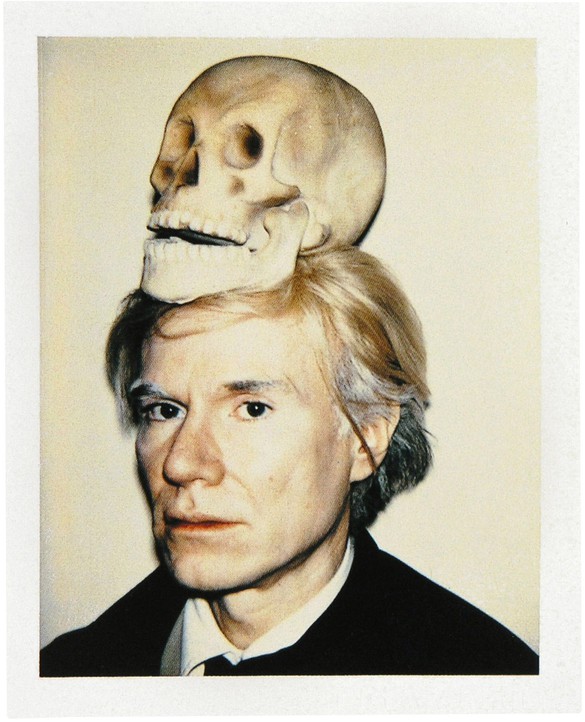
Andy Warhol was an artist who encapsulated the mechanistic nature of modern life in his practice. Through his use of tape recorders, screen printing, and cameras, his work reflected the industrial age of mass production more than any of his contemporaries. He went so far as to even call his studio, ‘The Factory’. In the book, ‘The Lonely City’ by Olivia Laing, he is quoted as saying, “The reason I am painting this way is that I want to be a machine, and I feel that whatever I do and do machine-like is what I want to do.” (Olivia Laing, The Lonely City, pg. 60)
Portrait of Andy Warhol
Andy was known for speaking in a cryptic, ambiguous manner, as this quote expresses. He speaks much like how the alchemists spoke, using riddles in interviews and recordings to mask the true complexity of his work. Another quote of his goes, “I like to be the right thing in the wrong place and the wrong thing in the right place. Being the right thing in the wrong place and the wrong thing in the right place is worth it because something interesting always happens.” (Andy Warhol, Andy Warhol Exhibition, Tate Modern, 2020)
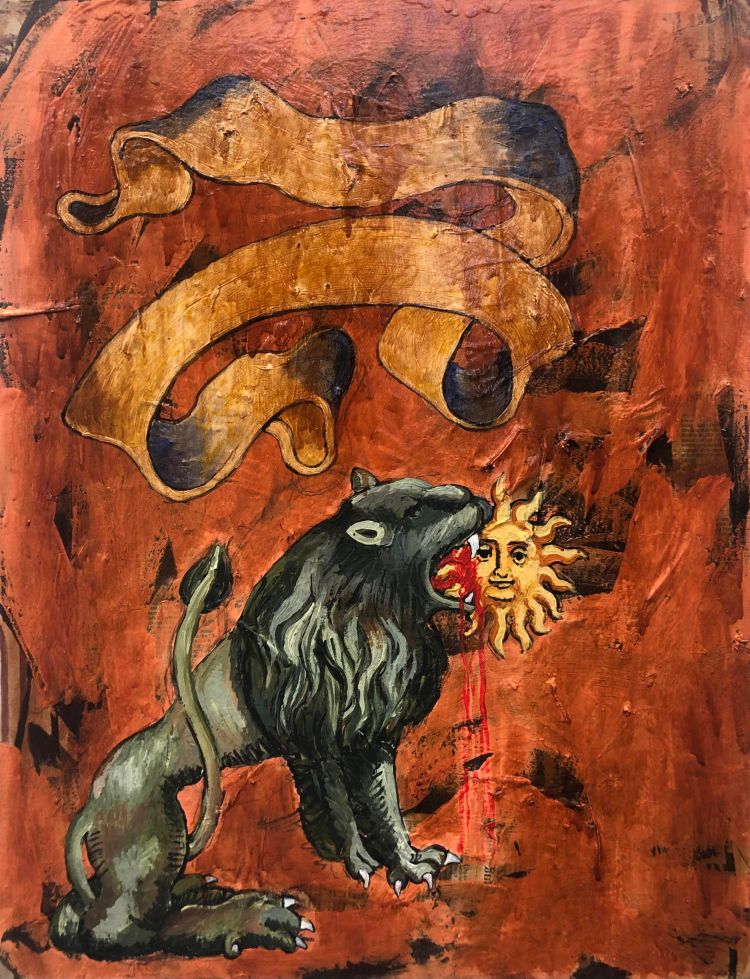
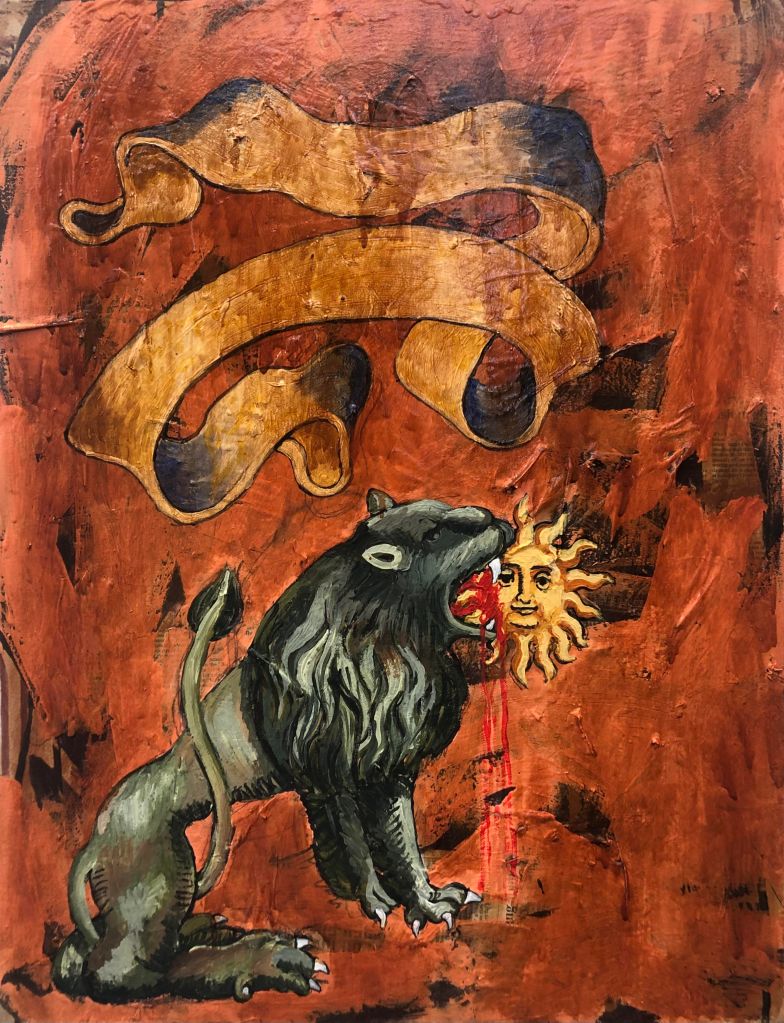
Green Lion
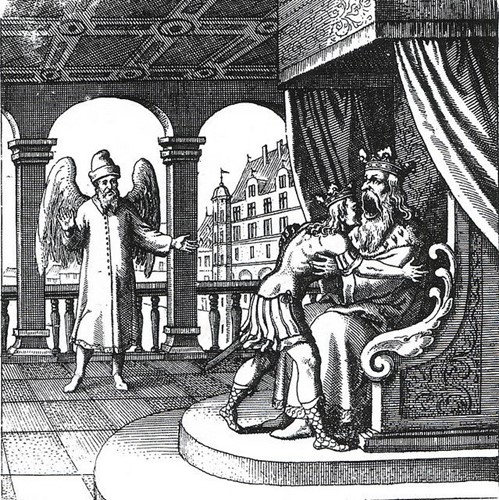
The Green Lion is another recurring motif in alchemy. The Green Lion refers to the spirit within matter, also known as Mercury or the Philosopher’s Stone. The sun is representative of the Logos, or the spirit, whilst the lion relates to matter. This motif of devouring is reflected in many instances in alchemical imagery, such as the king as prima materia, devouring his son.
Green Lion devouring the Sun, Rosarium philosophorum, 16th century
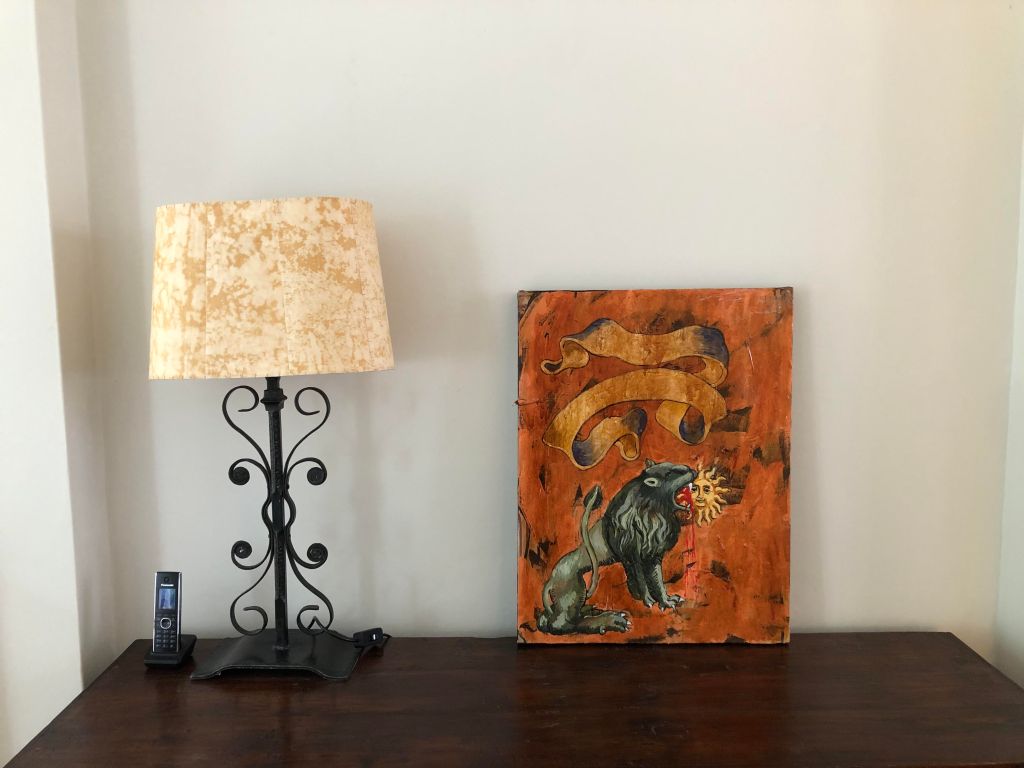
Green Lion
Acrylic, oil stick, oil, and newspaper on canvas
2023
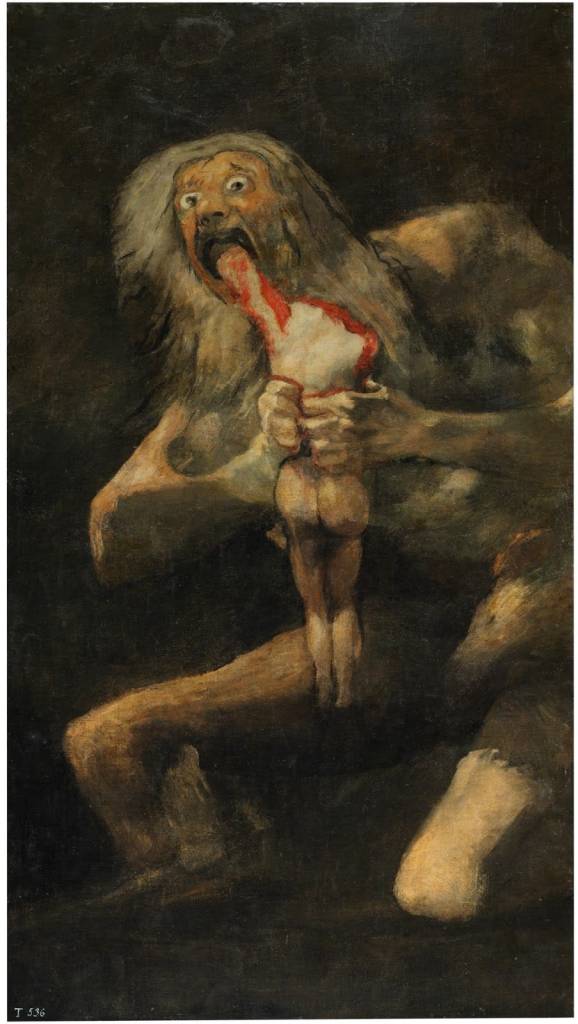
This theme of eating the divine is common throughout many religions, such as in Christianity where during mass the priest hands out ‘the body of Christ’ for people to ingest, or during Passover where the food eaten plays an integral part in the ceremony. Paintings are also something we ingest, visually as opposed to physically. ‘Saturn Devouring his Son’ by Goya reflects this fundamental facet of art in its most gruesome form.
Saturn Devouring his Son – Goya
The King as prima materia, devouring his son. – Lambspringk, “Figurae et emblemata,” in Musaeum Hermeticum (1678)
The extraction of the lapis (spirit) from the prima materia (matter), was the fundamental conquest of the alchemist. The young prince represents the spirit, whilst the King represents matter. Carl Jung says in his book that, “The “treasure hard to attain,” whose presence was suspected in the dark prima materia, is symbolized by the alchemists in various ways… The precious substance is potentially contained in this chaos as a massa confusa of all the elements rolled into one, and man must diligently apply his mind to it so that “our heaven” may come into reality (ad actum).” (C. Jung, Pyschology and Alchemy, pg. 340).
This quote bears a striking resemblance to a quote from Helena Blavatsky from her book ‘The Key to Theosophy’, “The intensity of our ardent aspiration’s changes prayer into the “philosopher’s stone”, or that which transmutates lead into pure gold.” (H. P. Blavatsky, The Key to Theosophy, pg.68)
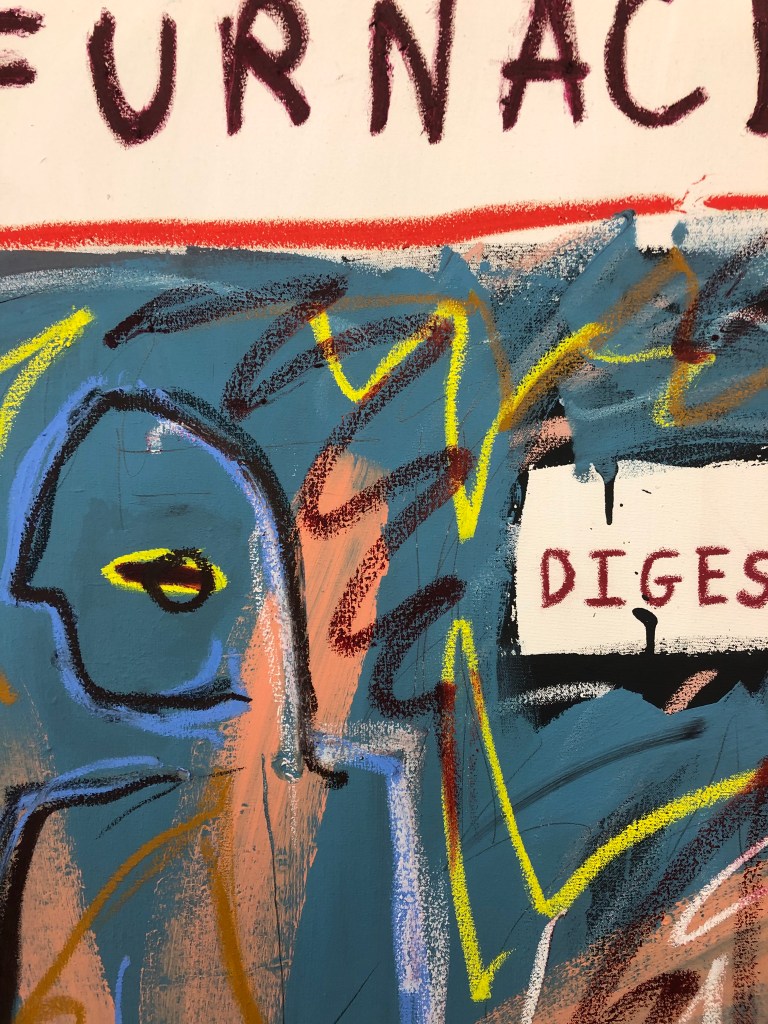
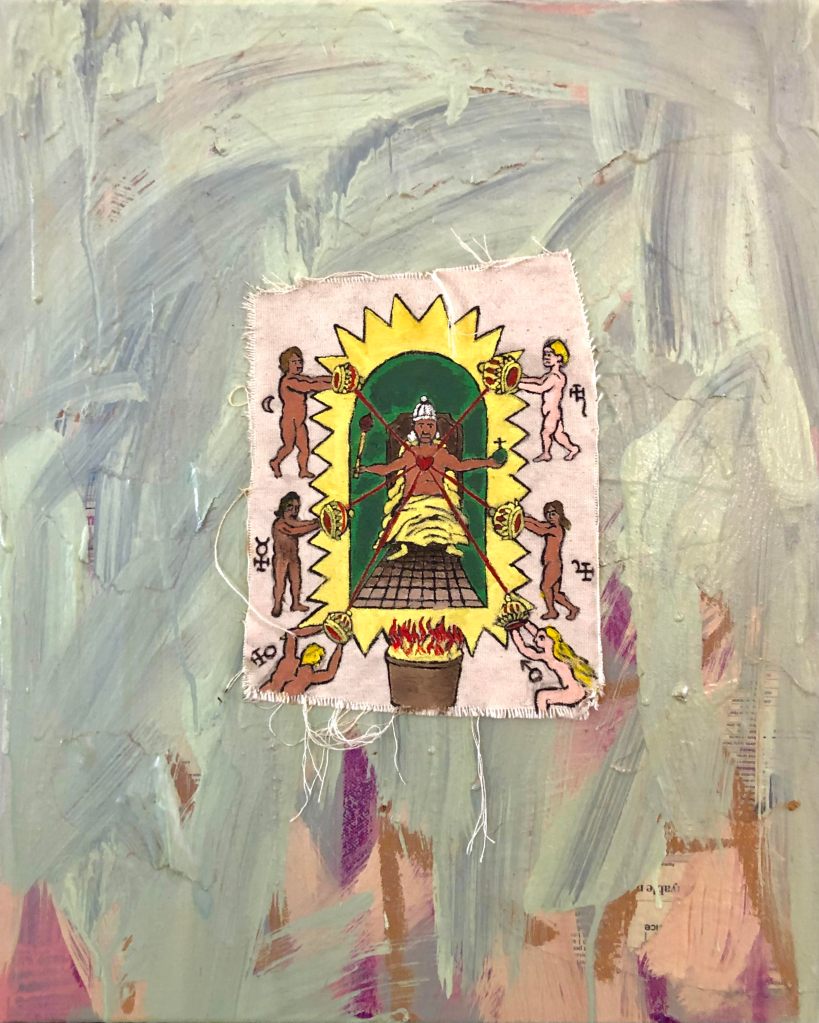
It is in this sense that the body becomes much like the alchemical furnace or vessel, devouring matter to elicit function. The furnace was an essential tool in the alchemist’s repertoire and aided in the extraction of the spiritus from the prima materia. I utilised the image of the furnace in several of my paintings in the past and in one of my recent drawings as it helps illustrate this quality of alchemy and art.
Furnace
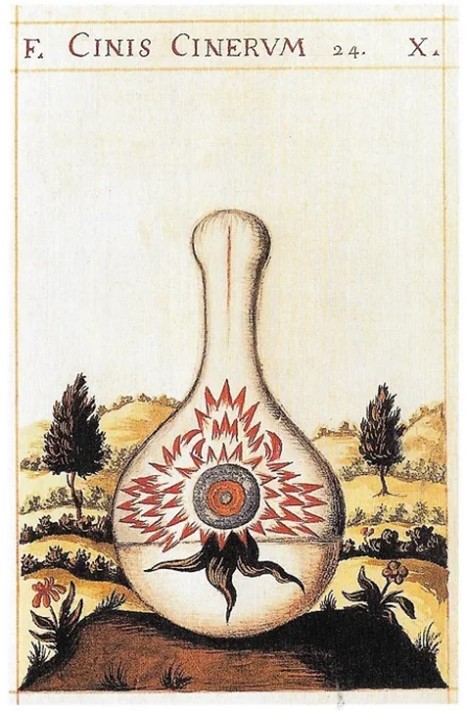
The furnace is a recurring motif in all alchemical recipes of extraction. Every alchemist’s furnace was different, with extremely specific requirements. As said by Jung, “For the alchemists the vessel is something truly marvellous: a vas mirabile. Maria Prophetissa says that the whole secret lies in knowing about the Hermetic Vessel. “Unum est vas” (the vessel is one) is emphasized repeatedly. It must be completely round, in imitation of the spherical cosmos, so that the influence of the stars may contribute to the success of the operation.” (C. Jung, Pyshcology and Alchemy, pg.236).
This is a plate taken from ‘Donum Dei’ which was first contained in 15th-century manuscripts and became one of the most widespread alchemical collections of quotations. Here, the stages of the work are illustrated in twelve pictures, this being the tenth.
Alchemists at Work
Graphite, charcoal, and ink on paper
2023
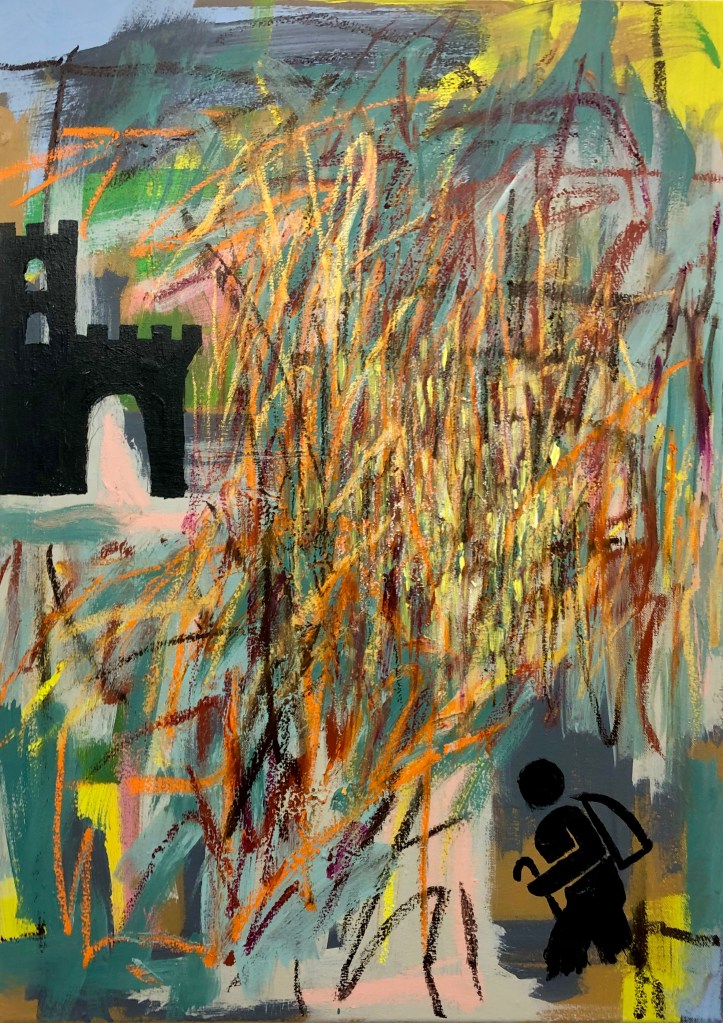
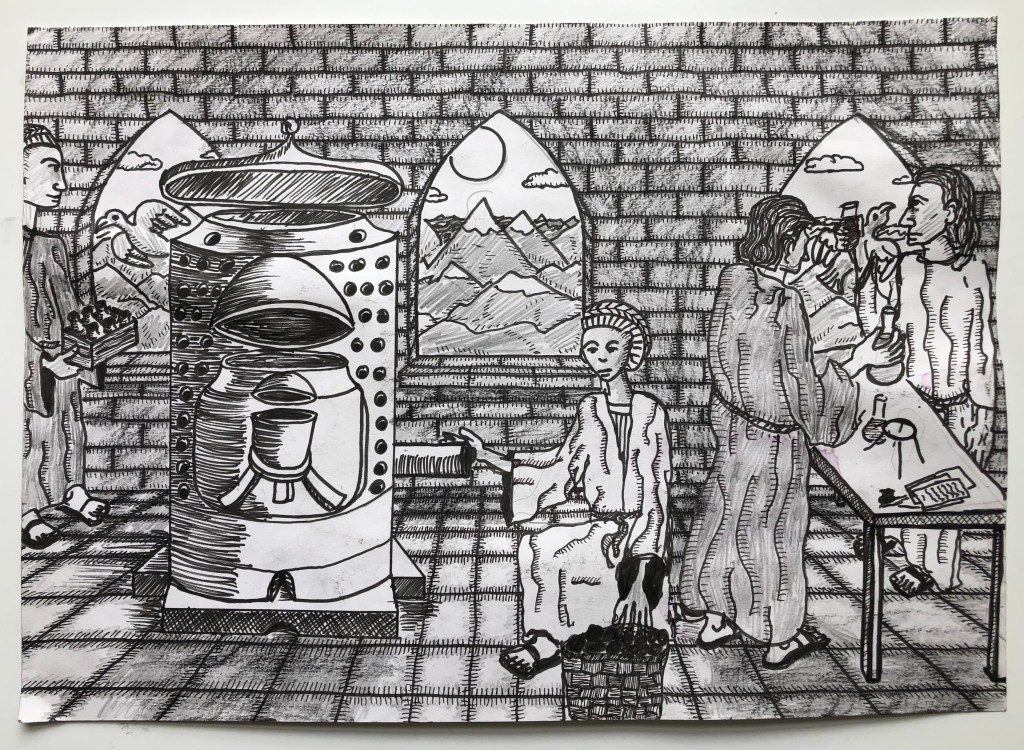
In my drawing ‘Alchemists at Work’ I captured a scene of Alchemists at work in a castle in the mountains. There are two birds flying in opposite directions outside the windows, representing the search for wholeness.
Alchemy can be considered a pseudo- science that was more interested in the motions of the planets, stars, and the individual rather than any fundamental truths. This relates to a Jung quote where he says, “I am therefore inclined to assume that the real root of alchemy is to be sought less in philosophical doctrines than in the projections of individual investigators. I mean by this that while working on his chemical experiments the operator had certain psychic experiences which appeared to him as the particular behaviour of the chemical process.” (C. Jung, Pyshcology and Alchemy, pg. 245)
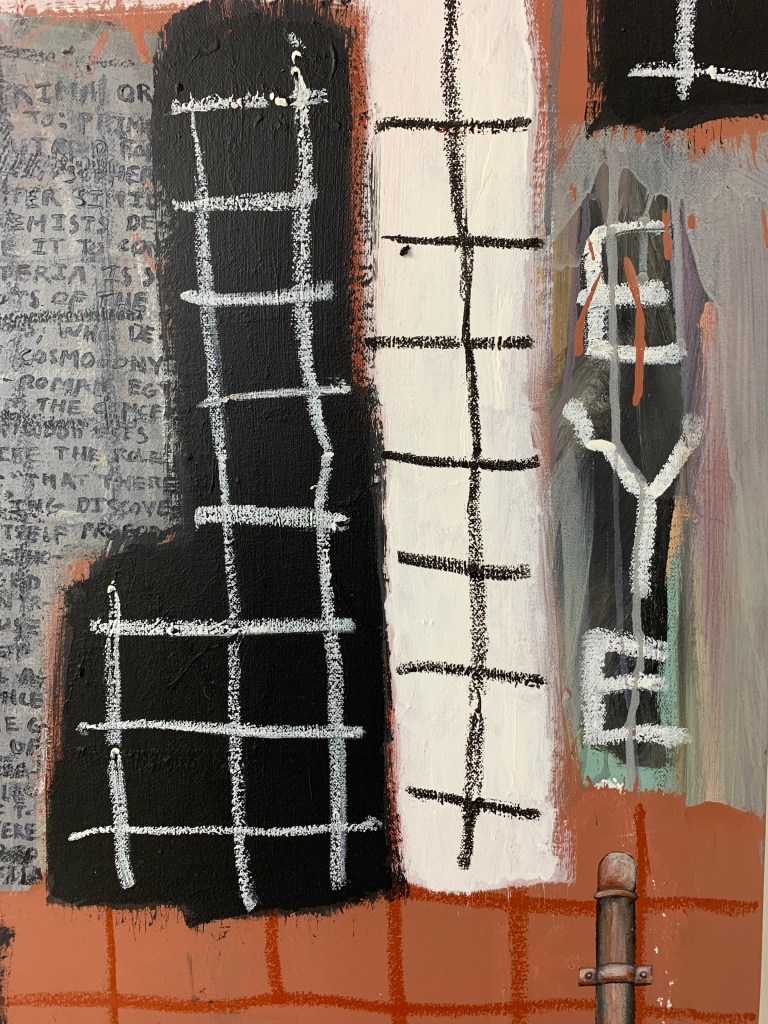
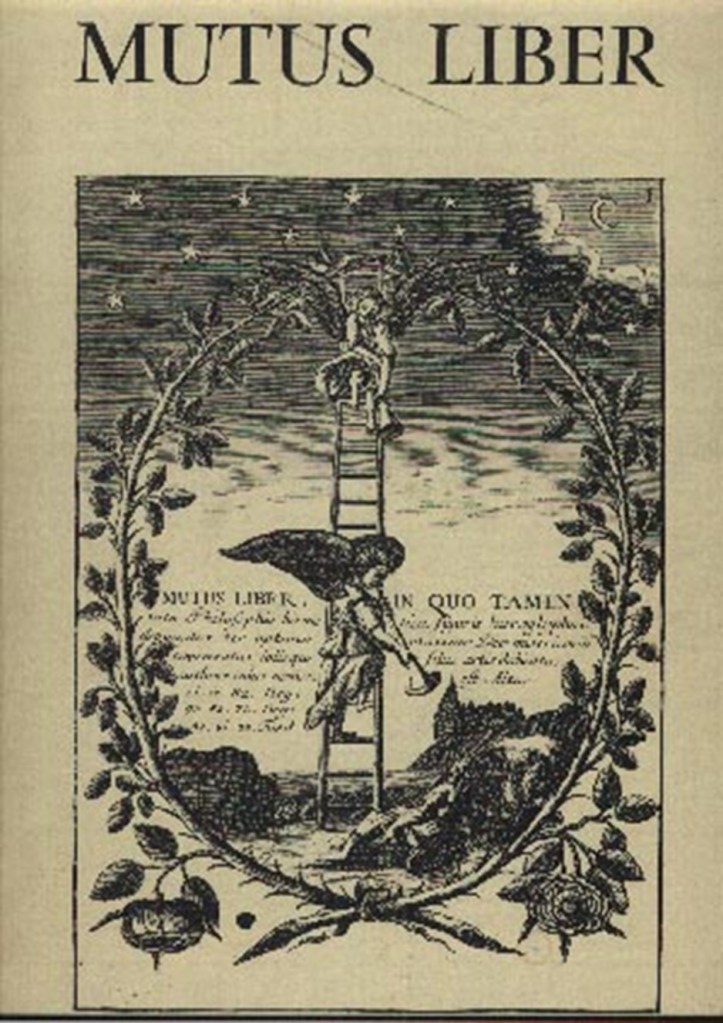
The Ladder
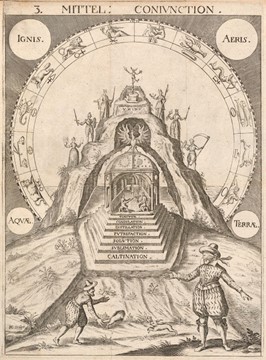
The ladder is used to represent the alchemical process. Depending on the source, each rung represents a different step towards the goal of transmutation. The end point is often represented as the Kingdom of Heaven, which is where the soul finally ascends the material realm. This can be represented in many ways, such as a phoenix, an angel, or simply a beacon of light.
S. Michelspacher, Cabala, Augsburg, 1616
Above is a famous alchemical print depicting the alchemist as a blind man. Alexander Roob in the book ‘Alchemy & Mysticism’ says of this plate that, “The alchemist is led astray until the fleeting mercurial hare indicates the correct sources material, behind whose rough façade, via the seven steps of the process, a palace is revealed. Here the principles of Sol and Luna unite to form the lapis, the “philosophical mercury”, which crowns the dome in the form of a phoenix.” (A. Roob, Alchemy & Mysticism, pg. 259)
As to the course of the process, the authors are vague and contradictory. Many content themselves with brief summaries, whilst others make elaborate lists. In 1576, Josephus Quercetanus, alchemist, physician, and diplomate, established a sequence of twelve operations as follows:
Calcinatio
Solutio
Elementorum separatio
Coniunctio
Putrefactio
Coagulatio
Cibatio
Sublimatio
Fermentatio
Exaltatio
Augmentatio
Proiectio
Each term has more than one meaning, therefore is it pointless going into them individually at this time.
Mutus Liber, plate 1
Jacob’s Ladder
Acrylic, oil, oil stick, and newspaper on canvas
2023
For my piece ‘Jacob’s Ladder’ I took inspiration from the ‘Mutus Liber’ which was a sequence of 15 plates published in 1677 by Jacobus Sulat. I was intrigued by the angel descending the ladder and its correspondence to the theme of the process. I also found that it could take another meaning of Lucifer falling from the heavens when banished. The aim of the piece was to leave the meaning ambiguous to provoke unexpected interpretations.
The Goal of Alchemy
Through all of the grandiose drama of the process, the actual goal of alchemy is just as ambiguous and confusing as the steps it takes to get there. What alchemy boils down to is an extraction of the spirit of matter, or the Holy Ghost, to then use to conjoin Heaven to Earth, redeeming humanity and saving us from damnation.
Plato often referred to the ‘Realm of Forms’ that being where all of the archetypal design for Earthly matter originates. Freidrich Heiller says in his essay, ’Contemplation in Christian Mysticism’, “In the grandiose visions of Plato, the divine Eros leads the soul upward from the contemplation of earthly beauty to that of absolute reality, of true being, of eternal truth, goodness, and beauty.”
What Alchemy intends to do at its core is excavate the matter of these immaterial realms and make it tangible, an essentially impossible task.
Artists such as Mondrian and Kandinsky, who were part of the Theosophy Society, believe art has an integral part in reweaving the spiritual nature of man into the modern, capitalist world we live in. As said by Silvia Fedirici, “The mechanistic view of Nature that came into existence with the rise of modern science ‘disenchanted the world’.” (Silvia Fedirici, Caliban and the Witch, pg. 226).
Perhaps it is the role of the artist to enchant the world again.
Conclusion
Alchemy has been a breakthrough for me and has guided me down a long and complicated path that I am only just starting to understand. Recapitulating on the old modes of understanding has been an enlightening exercise in learning about how art and science have evolved. Alchemy is a synthesis of both, art as a means of depicting early scientific methodology.
Prior to the discovery of gravity, molecules, the solar system etc. the alchemist must have been extremely frustrated at the lack of rational within the Universe. Simultaneously, this was also liberating in that it gave them no boundaries to where their imagination could wonder, producing unique perspectives and exhilarating art.
By studying their work I have practiced exercising this unconstrained freedom of mind and tried applying it to my work, evolving my practice in new and unexpected ways.
Bibliography
Bernoulli. R – Spiritual Development as Reflected in Alchemy and Related Disciplines – P. 1935
Fedirici. S – Caliban and the Witch – P. 2004
Heiler. F – Contemplation in Christian Mysticism – P. 1933
Since I was young I have loved entertaining people. Making people smile, gasp, contemplate, etc. has always filled me with joy. I’m not sure why. Maybe it is a part of my DNA, maybe it is a mechanism for fitting in. Whatever it is, it is an inherent part of my personality and has informed the path that I have taken.
Acting was my original medium for channelling this trait. Having been a part of youth theatre groups from the ages of 9 to 17, performing was an extremely formative part of my childhood. I loved the feeling of telling a story and making it as believable as possible with a group of like-minded individuals. At this time, I was sure this would be the industry I would dedicate my life to.
I think the appeal of fame was a factor. I thought it would be cool being a movie star, and I loved watching the Oscars and imagining what it would be like giving my acceptance speech. I think this corrupted me, making me envious of others, making me more competitive rather than truthful to the art, and it made every rejection hurt more.
Eventually I lost interest. I was no longer doing art for the sake of doing art, I was doing it for ulterior motives. There was a growing dissonance between what I felt inside and what I projected outside. Around the age of 17 it was especially heightened and acting began to lose all of its thrill.
At this time, I had become obsessed with drawing. Since I was young I had always drawn, being enamoured by my brother’s skill from an early age. I was always doodling in class and drawing at dinner time. Now I had an unsolicited urge to draw every evening instead of doing homework or watching TV. I loved using drawing ink, filling sketchbooks with images that I thought were really deep but were just the scribbles of a budding artist.
What drawing gave me was completely different to acting. Instead of my body being the vehicle of expression, the art I was creating became separate and I could watch it create itself at every instant. This control was far more desirable as in acting I was never entirely sure that what I was intending to express was coming across. Art provided a certainty, and I liked the physicality of it. As opposed to acting, a painting is an object that occupies a definitive place in time and space.
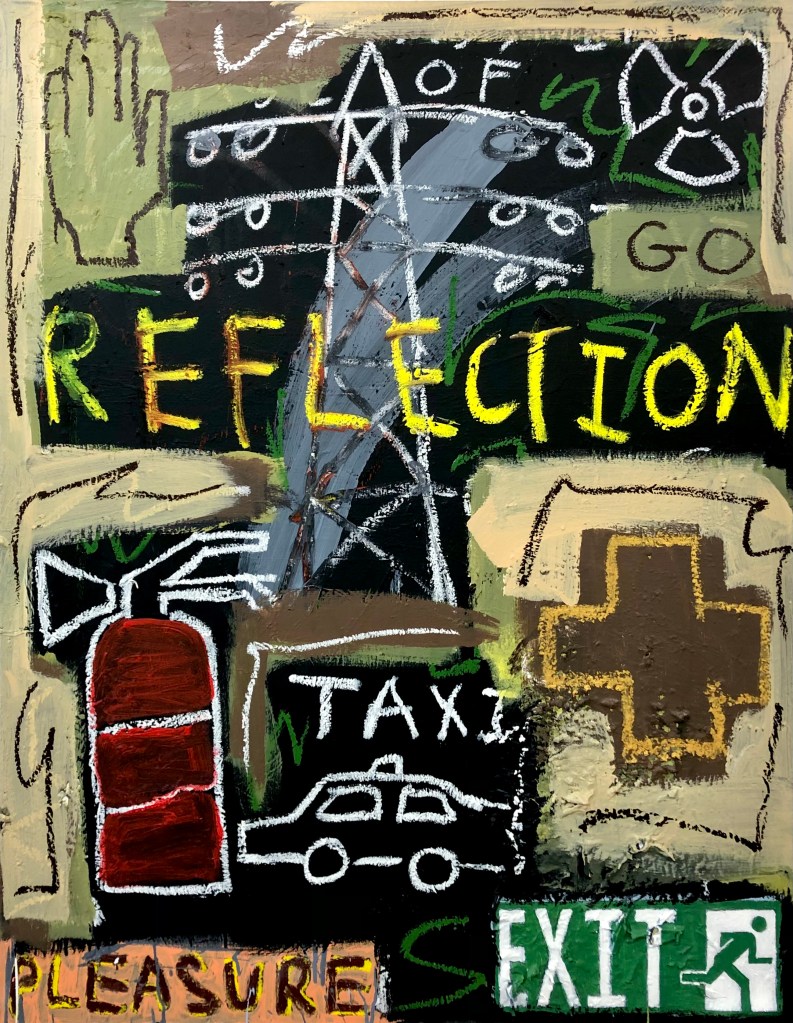
I have always had an appreciation for painting and the skill required to produce a Van Gogh or an early Picasso. These works were my only perception of what painting is and it restricted my overall understanding of it’s potential. When I was introduced to the work of Jean-Michel Basquiat, this all changed.
I was sat in the back of a Maths class when my friend told me of an upcoming Basquiat exhibition in London. I had never heard of the artist before and when he showed me his work something clicked. His bombastic, energetic, non-pretentious style resonated in a way that no other art had done before. Here was art that was an uncompromised expression of this person’s soul. It could be understood without any presuppositions of art history. His works defy tradition and are a pure reflection of his experience and what it means to be human.
Around this time, we were doing our final school exams. I studied Maths, Drama, and English. I was fairly determined to go to a high-ranking University and study English, however my grades were not good enough. I hated studying and I was dreading doing another boring subject at university. Do I pursue art? It seemed crazy but Basquiat had made me feel as though it were possible.
Luckily for me my parents were supportive so long as I went to university. At the time I had a full-time job in a law firm, so I only had the evenings to create a portfolio for my application. This, plus some evening art classes made for a busy schedule. With only a few months to pull together 10 paintings you would think I was under a lot of stress; however, it did not feel so. Instead, every time I painted, I was having fun. I felt like a child reclaiming my sense of passion and joy.
I am hugely indebted to the work of Basquiat. He arrived at his work after many years of soul-searching during a time where racial prejudice was rife and affecting the daily experience of him and his people. It was a tremendous task, and his resilience to adversity is what makes his story and art so potent.
Like science, art has a purpose. It does the thing that it did to me when I was 18 and saw the work of Basquiat for the first time. It gives meaning and reason to the lost and confused. My one goal with art is to continue the cycle and spin the wheel in perpetuum, becoming another link in the long chain. As I gain new and exciting interests and inspirations I will always make sure I remember the original initiates of my journey and admire and respect the legacy they have left behind.









































 Tom Allwinton Art