I felt a strong desire to understand the fundamental utility of art in the modern context we live in today when starting my most recent series of work. This, I felt, would influence the nature of themes I would address and, in some unconscious way, affect my process. In reading Alain de Botton and John Armstrong’s Art as Therapy and Charlotte Mullins’ A Little History of Art I was inspired by the unrealised potential of art and its unwavering presence in culture throughout time. I am now of the impression that our current conception of art does not do justice to its ability to affect change and expand the collective conscious. Using references from talks from artists such as Michael Krishanu and Jasmina Cibic I will hitherto clarify this opinion.
“One of the unexpectedly important things that art can do for us is teach us how to suffer more successfully.”[1] One of the many facets of depression is the sense that we are alone in our suffering. This loneliness is tantalizing, as it makes our suffering feel less justified. Art, however, denies this emotion and provides a platform to share these feelings. Matthew Krishanu does this when painting images of his wife in hospital while she suffers from terminal cancer. The figure he paints has soft, non-descript features, meaning the piece is not anchored by specificity, rather it is a general expression of pain and illness for all to relate to.
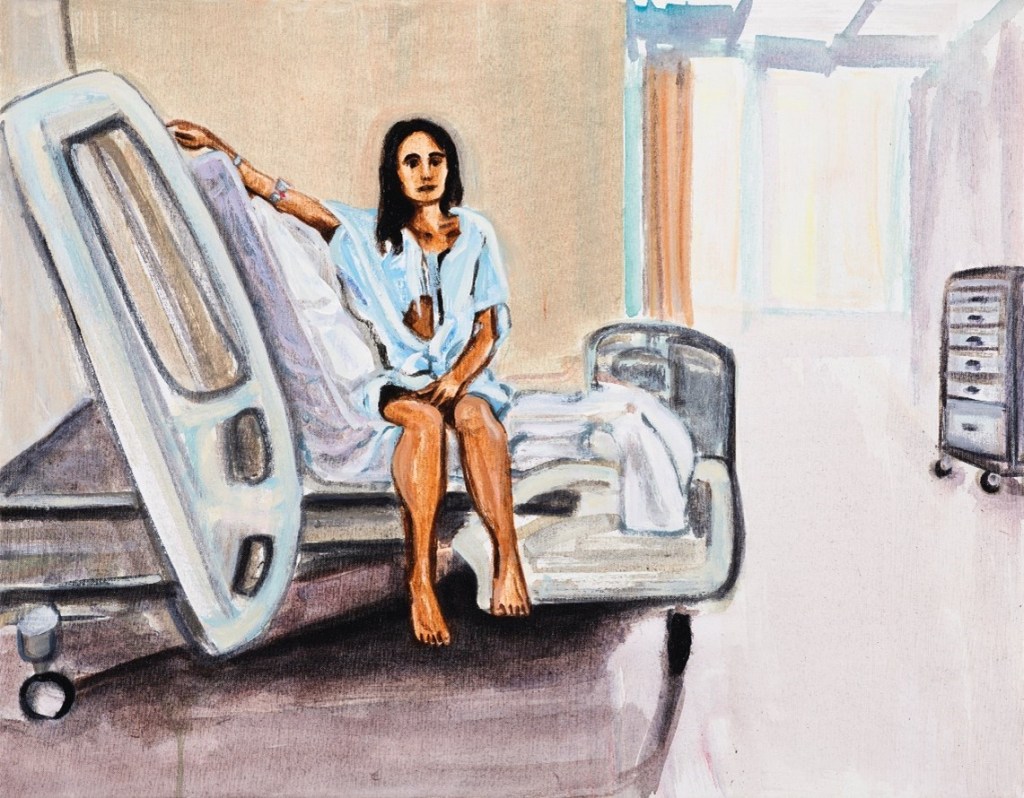
Hospital Bed (Barts), 2021, acrylic on canvas, 55x70cm
In making these themes of trouble and pain into pieces of art they can become tangible and digestible, rather than foreign and elusive, they become accessible and easier to process. This realisation provoked me to not be afraid of addressing the troubling side of existence, as it is there that art has the potential to effect positive growth in both its creator and those who view it and digest the shared experience.

Landscape with a Man Washing his Feet at a Fountain, Poussin c.1648
Landscape with a Man Washing his Feet at a Fountain expresses, in an ambiguous manner, the continuing hardship of life. The juxtaposition of the two men shown either side of the work, one being a labourer in the midst of a job and the other being berated by his wife for not working hard enough, showsthat, “labour is the unavoidable and unexciting condition of life.”[2] This debilitating realisation often causes melancholy and despair; however, Poussin denies this and transforms it into the glory of life and nature, giving us new wind in this plight.
Audre Lorde writes, “I have come to believe over and over again that what is most important to me must be spoken, made verbal and shared, even at the risk of having it bruised or misunderstood.”[3] This quote emphasizes the ability of art in asserting one’s voice. Matilda Moors, a contemporary artist, uses cartoon-like imagery to express the inner-child which is quickly supressed when one is forced into becoming an adult. This inner child is what we all lose touch with once the brutality of life dwarfs our innocence. In getting in touch with this, we regain a part of our inner wholeness. Matilda encapsulates the expression of identity and the ways in which it can become convoluted by modern media.
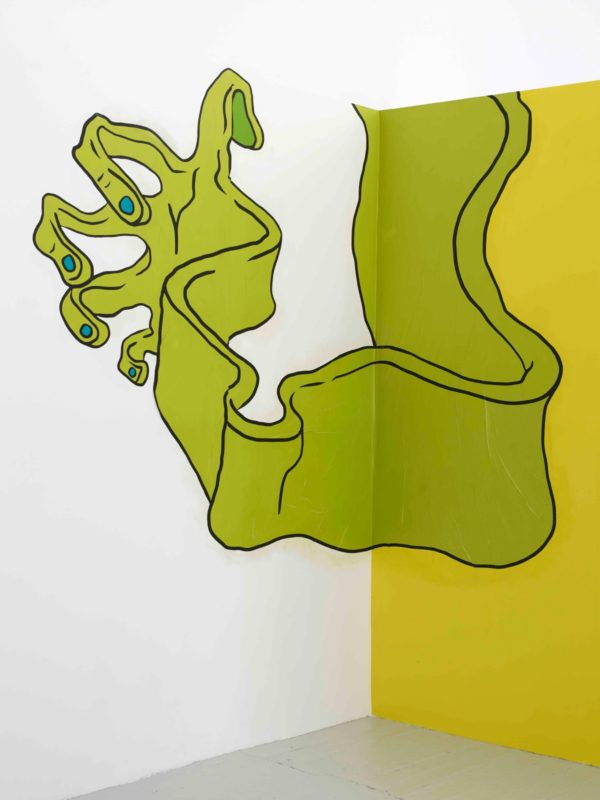
Formatting Error, Digital print, wheat paste, 220 x 315 cm
As said by Alain de Botton and John Armstrong, “Art is one resource that can lead us back to a more accurate assessment of what is valuable by working against habit and inviting us to recalibrate what we admire or love.”[4] By making us question the world, art forces us to reinvent the way we look at things. This allows for fresh perspectives, and means we never get stuck in the ways of the past.
Jasmina Cibic is a Slovenian artist who threatens and exposes the political zeitgeist that inhabits the modern world. Her piece in the Slovenian Pavilion is a standout example of art which, with pictures of a bug named after Adolf Hitler, comments on the absurdity of dogmatic legislation. The rule states that once an animal has been named it cannot be changed, and she uses this as an expression of the ways in which political bodies can still be controlled by the past. Art can expose the stagnant ways of the past and provoke people to think differently about things they thought were unalterable truths, allowing us to heal from mistakes which were not beneficial to society.

Fruits of Our Land, Jasmina Cibic
Not only can a piece of art be a spiritually awakening object in-itself, but it also has the potential to elevate the environment in which it is placed within. The ancient Egyptians believed that by decorating the walls of a tomb with things such as food, crops, comfy furniture and so on then that would be given to the person buried in the tomb in the afterlife. This sort of art cannot be considered as healing, however, as this was only done for the very wealthiest of individuals at the time, and not for the collective. Unfortunately, this is a trend that is common throughout all of history, where the rich use art as a means of decoration, veiling corruption, and inequality. This is especially obvious in Italy[5] and Greece, where cities competed to make the most glorious temple. Similarly, today in the “successful” galleries the most expensive pieces of art are on display, rather than the more spiritually potent. Art has become a commodity of wealth rather than as a means of healing the collective.
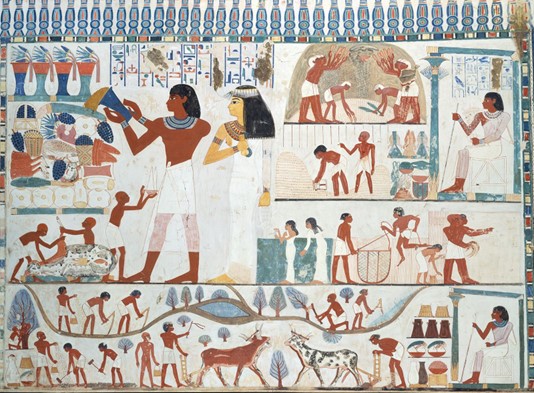
Ancient Egyptian Tomb Art, unknown source
In basing my research around this topic, I uncovered a lot of false perceptions and fundamental truths about art which have given me a fresh view on its utility in today’s society. The use of it as decoration for the wealthy has undermined its ability in expanding and changing the perceptions of the collective. Art is capable of loosening our hold on stagnant ideas and paves the way for new ways of thinking, acting as a catalyst of sorts. Art can be considered healing in many ways, however the most essential way is its ability to purge us of the negative attributes of the past and prepare us for a new, brighter future.
[1] Alain de Botton and John Armstrong, Art as Therapy, Methodology, pg.24
[2] Alain de Botton and John Armstrong, Art as Therapy, Money, pg.186
[3] Audre Lorde, Your Silence Will Not Protect You, The Transformation of Silence into Language and Action, pg.1
[4] Alain de Botton and John Armstrong, Art as Therapy, The Seven Functions of Art, Appreciation, pg.53
[5] “Under Pope Julius II, and for the first time since antiquity, Rome was fast becoming the most important Italian city for art. Julius had come to power in 1503 and was determined to make Rome the greatest city in Europe. He realised art was key to achieving this. He commissioned the most ambitious projects and employed the best artists he could find.” – Charlotte Mullins, A Little History of Art, pg .103 – The Return of Rome – This quote expresses the importance of at as a status symbol and how leaders and governments utilise it to express the prestige of their country. This is often just a façade, however, as they are still unable to resolve the plights of poverty and other ailments which are left unseen.
 Tom Allwinton Art